The Surprising Benefits of D&D for Kids

Forget everything you think you know about Dungeons & Dragons being just a game for basement-dwelling adults. The truth is, D&D is one of the most powerful, engaging, and fun tools available for child development. It’s not just about slaying dragons and finding treasure; it’s about building confidence, fostering creativity, and teaching social skills that will last a lifetime.
The benefits of D&D for kids extend far beyond the game table, offering a unique blend of educational and emotional growth that few other activities can match. It’s a collaborative storytelling engine where the only limit is a child’s imagination, making playing D&D with children an incredibly rewarding experience for everyone involved.
In a world dominated by screens and passive entertainment, playing D&D with children is a fantastic way to engage their minds actively. It’s a workout for the brain disguised as a game. When kids are at the table, they aren’t just rolling dice; they are solving problems, thinking on their feet, and learning to work as part of a team.
And the best part? They’re having so much fun, they don’t even realize they’re developing crucial life skills. Plus, they are not staring at a screen like a zombie.
How Playing D&D with Children Builds Creativity
At its core, D&D is an engine for creativity. The game asks a simple, powerful question: “What do you do?” and then lets the story unfold from the answer. This open-ended format is a playground for a young mind, actively encouraging the kind of creative thinking that’s essential for problem-solving in the real world.
Playing D&D with children is like giving them the keys to their own universe, where they can build anything from a noble knight to a mischievous wizard and then decide how that character interacts with a world full of possibilities.
This creative process is key to the benefits of D&D for kids. Players are constantly pushed to think outside the box, crafting inventive solutions to the challenges posed by the Dungeon Master (DM).
Do you fight the troll or try to reason with it? Do you sneak past the guards or create a clever distraction? There are no single “right” answers, which empowers children to experiment and take creative risks in a safe, supportive environment.
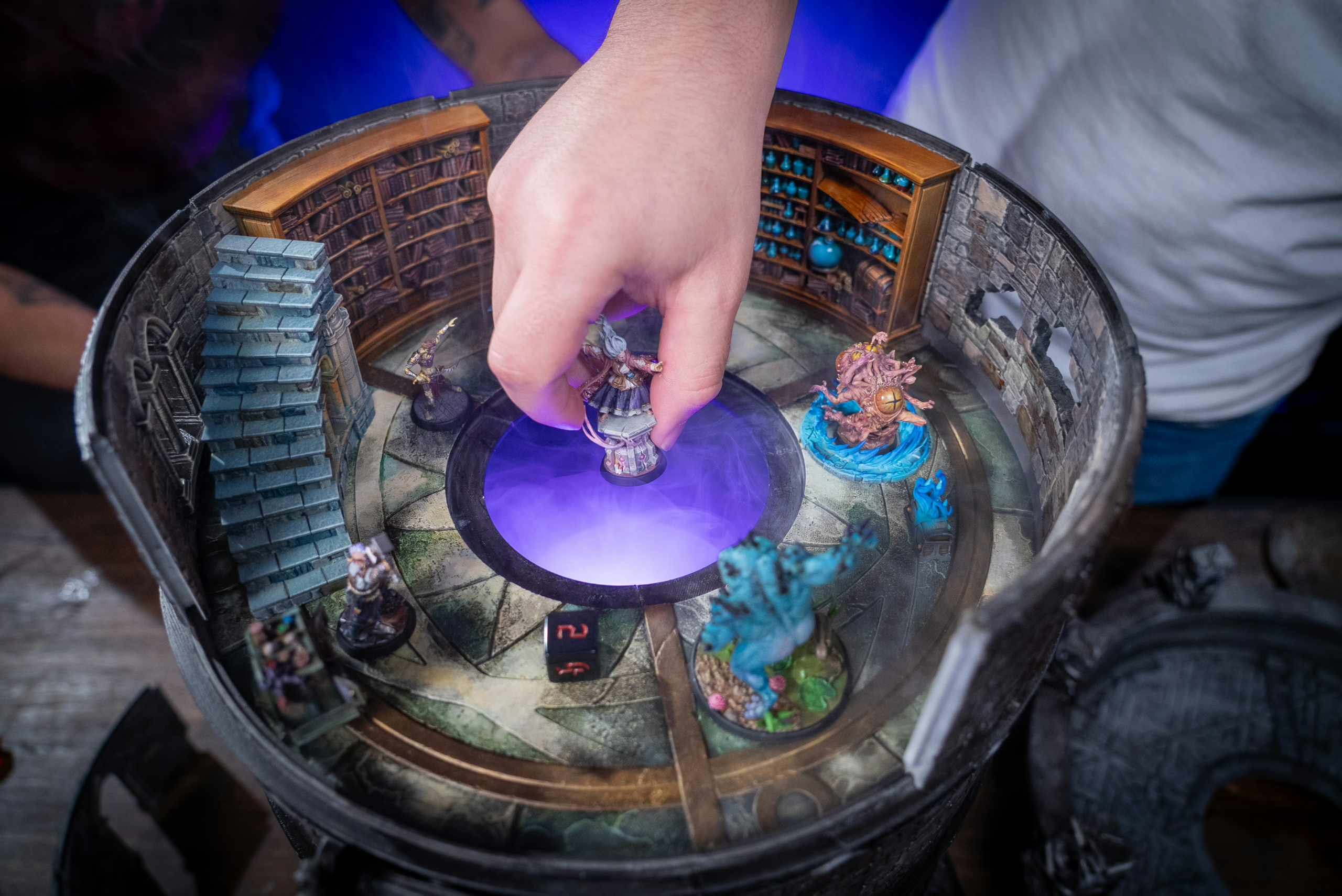
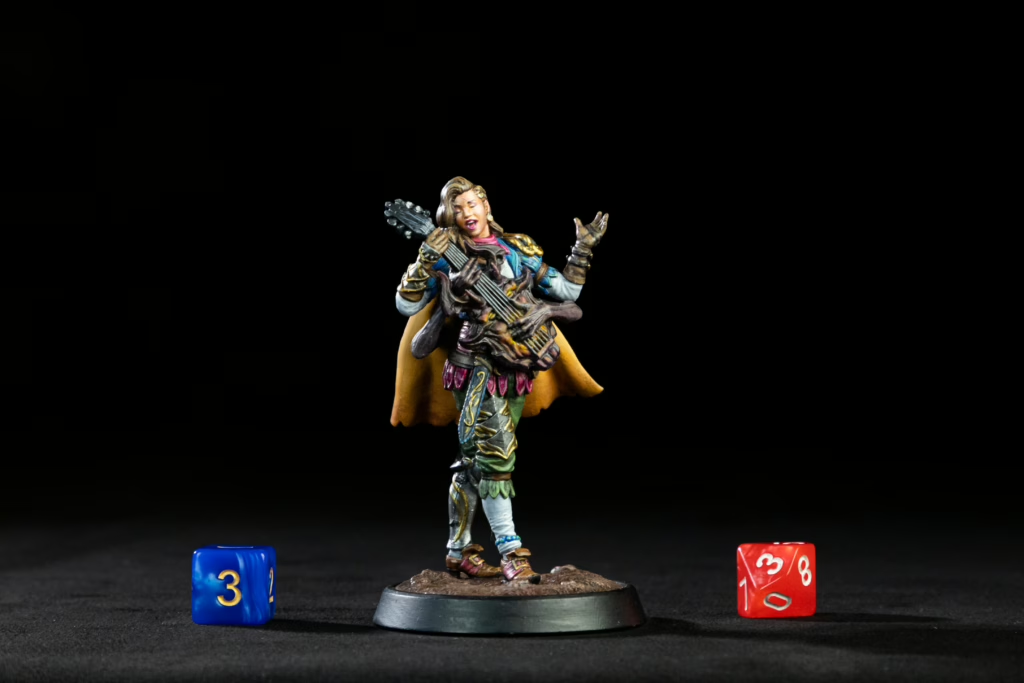
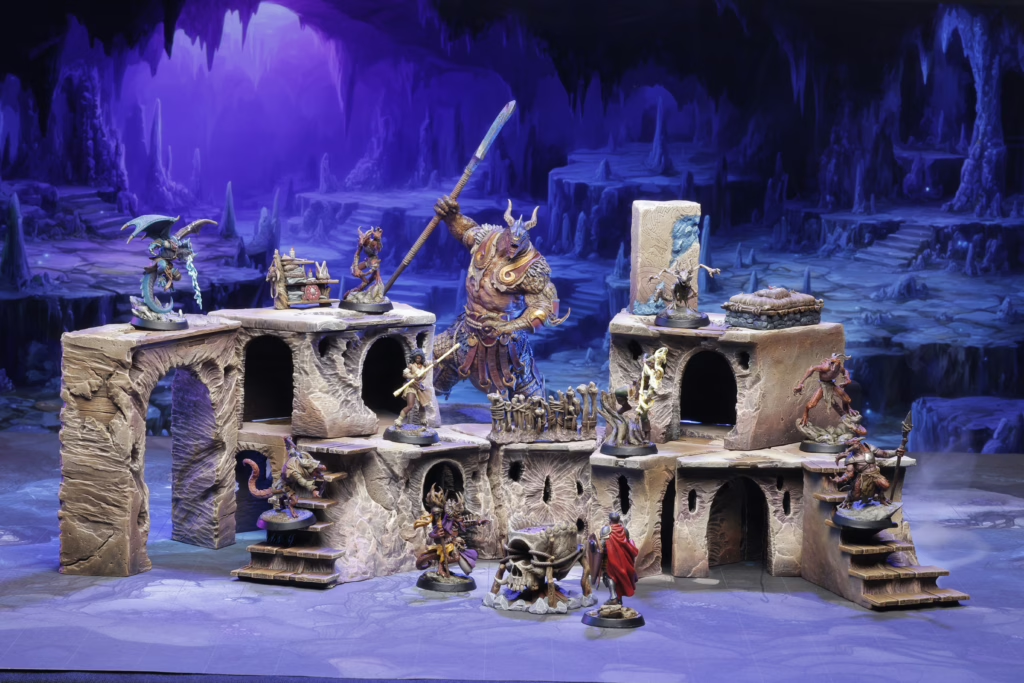
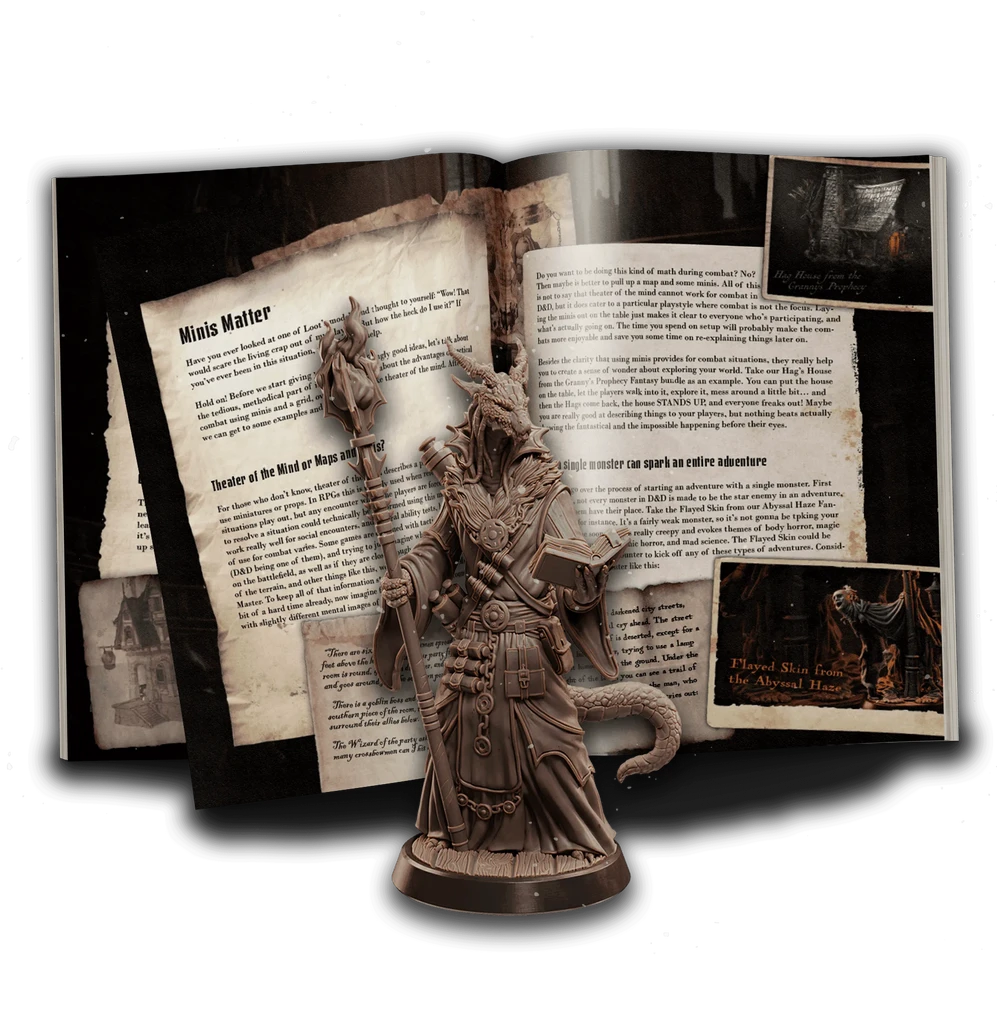
And when the action heats up, tangible elements can make that creativity even more vivid. Adding a well-placed piece of terrain or a striking miniature to the table can provide a fantastic physical anchor for the imagination, helping to bring the world they’re creating to life.
How D&D Improves Social Skills for Kids
One of the most significant D&D social skills for kids is learning to collaborate. The game is a team sport, requiring players to work together to overcome obstacles. Each character has unique strengths and weaknesses, and success depends on the party acting as a cohesive unit.
This interdependence is a powerful lesson in cooperation and shared goals. They have to listen to each other’s ideas, negotiate plans, and learn to deal with frustration when the dice don’t go their way.
Furthermore, the game provides a structured framework for social interaction. The rules, which include concepts like taking turns and respecting the DM’s authority, offer a clear guide for social engagement. This structure can be particularly beneficial for children who find unstructured social situations challenging.
It creates a safe space to practice essential skills like active listening, verbal communication, and empathy. By stepping into the shoes of a character, kids can explore different perspectives and learn to consider the feelings and motivations of others, both in the game and in their own lives.
Can Dungeons & Dragons Improve Problem-Solving Skills?
Absolutely. Every session of D&D is a series of puzzles and challenges, from navigating a treacherous dungeon to defusing a tense political situation (age-appropriate, of course). Players must assess risks, weigh options, and make decisions that have real consequences within the story. This constant decision-making helps develop critical thinking and analytical skills, as kids learn to evaluate situations and formulate effective plans.
The game also teaches a crucial, often-overlooked lesson about failure. In D&D, a “failure” is rarely a game-over; it’s simply a twist in the narrative. An unsuccessful roll to pick a lock might mean the guards discover the party, leading to a thrilling escape sequence.
This framework, often discussed in the context of child development and learning, reframes failure as an opportunity for growth and creativity, building resilience and reducing the fear of making mistakes. It’s a low-stakes environment where kids can try, fail, and try again, all while having a fantastic time with their friends.
How D&D Develops Critical Thinking and Decision-Making
The challenges in D&D are far from just “hit the monster” scenarios. Many quests involve complex mysteries, moral dilemmas, and resource management. Players might need to deduce a villain’s plan, negotiate a treaty between warring factions, or decide how to spend their hard-earned gold to best prepare for the next adventure.
The math skills involved in calculating damage, spell effects, and experience points are just the beginning. The game teaches logical thinking by requiring players to understand cause and effect and to think through the potential outcomes of their actions. These analytical skills are directly transferable to schoolwork and other areas of life.
While you work on these mental muscles, you can also enhance your tabletop setup. If you’re looking to take the game to the next level, consider our guide on how to upgrade your D&D setup with 3D-printed terrain that can turn the mental puzzle into a physical reality.
Dungeons & Dragons Is Great for Shy Kids
For a shy child, the prospect of a game that involves roleplaying and social interaction might seem intimidating, but D&D is uniquely suited to help them blossom. The game allows kids to adopt a persona, giving them a safe “mask” to wear as they interact with others.
A quiet child can find their voice through a bold, charismatic bard, or a reserved kid can enjoy being a powerful warrior. This psychological “bleed” can help build real-world confidence and self-esteem. The supportive, team-oriented environment allows them to contribute without the pressure of being “themselves,” which can be a tremendous relief.
The game also has a clear structure and defined rules that make socializing more predictable and less scary. This framework can be a source of comfort and empowerment.
To help any new player feel more comfortable and confident, a good character is essential, and you can find plenty of inspiration to help them create their perfect hero in our guide to RPG character creation.
Final Thoughts
D&D is an activity that builds confidence, fosters creativity, and teaches invaluable social and analytical skills. It’s a vibrant, social, face-to-face hobby that encourages collaboration and friendship. Whether the adventure leads them through a dungeon or a forest, the skills they gain and the memories they make at the table will last a lifetime.
Are you ready to bring the world of D&D to life at your table? Explore our extensive library of miniatures, including free samples, and start building your collection today!
Loot Studios can help you tell your story through highly detailed minis, statues, terrains, busts, and props. Sign up for Loot and choose your favorite bundles from our library of more than 130 options. You can also learn more about our printing and painting process by checking our YouTube Channel.


Luiza Romagnoli is an autistic Brazilian woman, journalist, and obsessed with RPG. She has been writing since she can remember, but it was in 2017, posting texts on Instagram, that she began to take it seriously. She has a poetry book published by Patuá Publishing House: sirva o chá. Nowadays, Luiza is a multi-hyphenned professional: she’s a writer, translator, English and Spanish Teacher, and has an RPG stationery store: Papelaria do Aurel. Although having all these jobs almost leave no room for her D&D sessions, she still loves them.