Exploring RPG Races: Elves
Poets, Artisans, and Skilled Adventurers
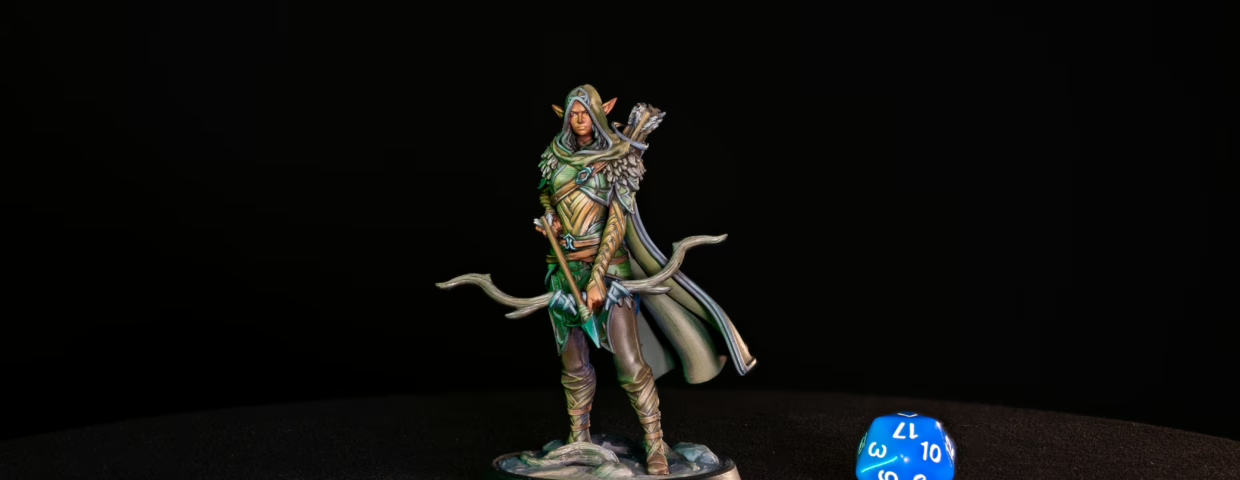
Standing before stone gates that will crumble to dust long before they spot their first gray hair, an elf views time differently. To them, a mortal companion’s entire life is just a fleeting season—a brief, frantic summer before winter takes over. They are ancient echoes walking a young world, moving with an eerie, rhythmic grace.
When you choose to play an elf, you aren’t just picking pointy ears, high agility, and a knack for archery. You’re stepping into an existence defined by centuries of memory, ancestral magic, and the quiet melancholy of watching everything you love eventually pass away. It’s one of the most popular choices at the table, but running an elf well means moving past the cliché of the arrogant archer and tapping into what it actually feels like to be completely “other.”
Here’s an overview of elves in D&D and Pathfinder and what players should expect when roleplaying them.
Why Players Love Elves in RPGs
We’ve all seen the classic player who picks an elf just to optimize stealth checks. But the real depth of this ancestry lies in the roleplay potential.
The immortal perspective forces you to change how your character processes trauma, relationships, and history. An elf might remember the great-grandfather of the human paladin sitting across the tavern table, or recall when the dungeon you are raiding was a bustling capital city. There’s a beautiful, detached traveler vibe to the elven kind. They bridge the gap between high-society refinement and the raw, untamed elements of nature. You get to play an intelligent, hyper-perceptive outsider who forces the rest of the party to look at the world through a much longer lens.
What is an Elf?
Mechanically, you know the drill. You get a natural edge in physical grace, sharp eyesight in the dark, and your fey ancestry means you are highly resistant to charm magic and immune to magical slumber.
But the real flavor is the Trance. Elves don’t sleep. Instead, you sit awake for four hours, fully conscious but drifting through the vast, organized archive of your own centuries-old memories while the rest of the party snores around the campfire. It makes you the ultimate night watcher during a tense dungeon crawl—ever vigilant while mortals dream.
But there’s a catch nobody talks about: holding hundreds of years of memories can break a mind if the character hasn’t learned to compartmentalize the loss, grief, and passing of time.

The Evolutionary Lineage: Different Elven Peoples
The old-school forests aren’t the only places elven kind calls home anymore. The modern tabletop has cracked wide open, exposing cultures from the deepest caverns to the outer planes.
High Elves & Wood Elves
The classic standard-bearers. High elves are steeped in arcane tradition, spending decades perfecting a single spell or political maneuver. Wood elves are the swift, silent guardians of primordial wilds, capable of fading into a patch of heavy rain or thick foliage before an enemy can even blink.
The Underdark & Dark Elves (Drow)
Bred in the sunless depths of the Underdark, the Drow are defined by a heavy, dangerous presence. Their commanding aura isn’t for being friendly, it’s the sheer weight of their intimidation and authority. They are deadly with rapiers and hand crossbows, though their eyes suffer under the blinding surface sun.
Eladrin & Shadar-kai
If you want to push the fantasy further, look to the planes. Eladrin hail from the Feywild and physically change color and demeanor based on their emotional seasons. A Summer Eladrin burns with righteous fury, while a Winter form carries a frozen, quiet sorrow. On the flip side, the Shadar-kai serve the Raven Queen in the Shadowfell. They are gaunt, pale, and completely stripped of vibrant emotion, moving through the world like grim phantoms.
Sea Elves, Astral Elves, & Half-Elves
From the crushing ocean depths to celestial ships sailing the astral void, these ancestries break the classic mold entirely. And for those who want a foot in both worlds, the Half-Elf carries the grace of their immortal side mixed with the burning, desperate urgency of human ambition.
DM Inspiration: Using Elves in Campaigns
If you’re sitting in the GM chair, stop treating elves like humans with pointier ears and better posture. Use them to anchor the deep history of your world.
An elven noble house doesn’t plan for the next five years; they plan for the next three centuries. Their political plots should feel slow, frustratingly patient, and subtle. When a war breaks out, it’s rarely over a recent trade dispute. It’s likely the continuation of a blood feud that happened four hundred years ago. To the short-lived peoples, that war is just a myth in a dusty book; to the elven general leading the vanguard, the wounds are from his own youth. Lean into that cultural arrogance. An isolationist society might watch a human village get raided by monsters and simply choose not to interfere, viewing the tragedy as a brief, natural blip in the mortal cycle.
Bringing the Legend to the Table
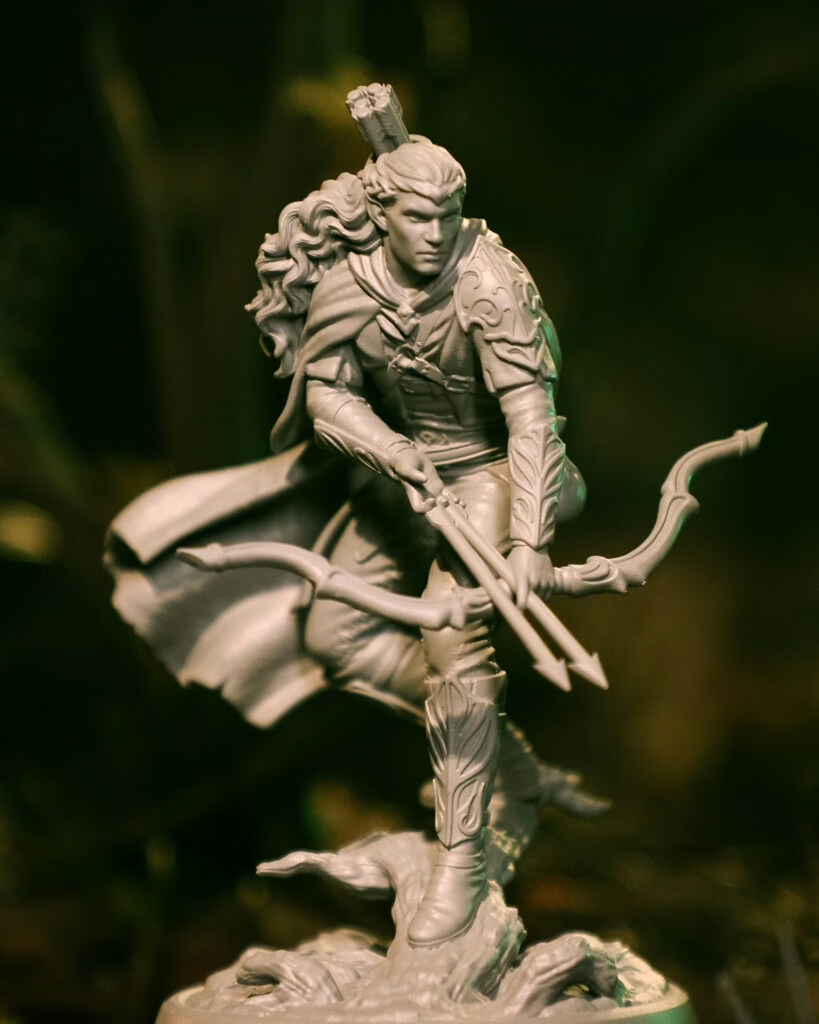
You can describe an elven bladesinger’s fluid movements all day, but the narrative hits different when a gorgeous, high-detail miniature drops onto the grid. The visual contrast tells the story instantly.
The Long Road Ahead
Playing an elf means balancing on the knife-edge between timeless elegance and the crushing weight of watching the world change around you. Let that ancient magic bleed into how your character speaks, fights, and remembers.
Which lineage are you bringing to your next session? Let’s get the printer running and build your legend.
Loot Studios can help you tell your story through highly detailed minis, statues, terrains, busts, and props. Sign up for Loot and choose your favorite bundles from our library of more than 130 options. You can also learn more about our printing and painting process by checking our YouTube Channel.
Robert, also known as Rob, is an artist, English teacher, and lifelong RPG enthusiast. When he’s not sketching worlds or guiding learners through language, he’s diving into dice-rolling adventures and uncovering the magic that makes tabletop storytelling unforgettable. Fuelled by imagination and curiosity, Rob has spent years immersed in the RPG community, studying its stories, creatures, and creativity. He currently works in the marketing department at Loot Studios, where his passion for fantasy, minis, and the RPG universe fuels everything he does. Always with one foot in the real world and one in the realms of adventure, Rob celebrates art, language, and the joy of bringing ideas to life, whether at the table, in class, or behind the scenes.