What Are RPG Classes?
A Beginner’s Guide to D&D and Pathfinder Classes
If you have looked into the two biggest names in the Fantasy RPG—Dungeons & Dragons and Pathfinder—you have likely noticed a frustrating truth: the D&D classes list is similar to the Pathfinder classes list but not identical. The internet is full of heated debates about which system does it better with their own RPG classes.
Here is the truth: while there are mechanical differences under the hood, the concept of an RPG class transcends the system. Whether you are asking what D&D class I am based on my personality or searching for the top easy classes in Pathfinder for beginners, the core principles of choice are the same. This guide will detail the concept of RPG classes, give you the main ideas behind the most popular archetypes, and—most importantly—help you choose the perfect role for your very first character, regardless of whether your Dungeon Master (DM) runs D&D 5e or Pathfinder 2e.
Why Your RPG Class Choice Defines Everything
Imagine you are about to watch a heist movie. The crew consists of a safecracker, a getaway driver, a muscle-bound enforcer, and a smooth-talker. You immediately know their roles, their strengths, and their weaknesses. RPG classes serve the exact same function for collaborative storytelling. They are the pre-built “jobs” that ensure every player has a moment to shine.
Without classes, a party of four players might all create “fast guys with swords,” leading to a boring game where no one can pick a lock or heal a wound. With classes, you build a balanced team. This guide will break down the differences between D&D classes and their Pathfinder cousins and turn them into digestible categories, explain the best way to decide your RPG role, and point you toward the resources you need to bring that character to life—including the stunning 3D printable miniatures from Loot Studios that will make your hero stand out on the table.
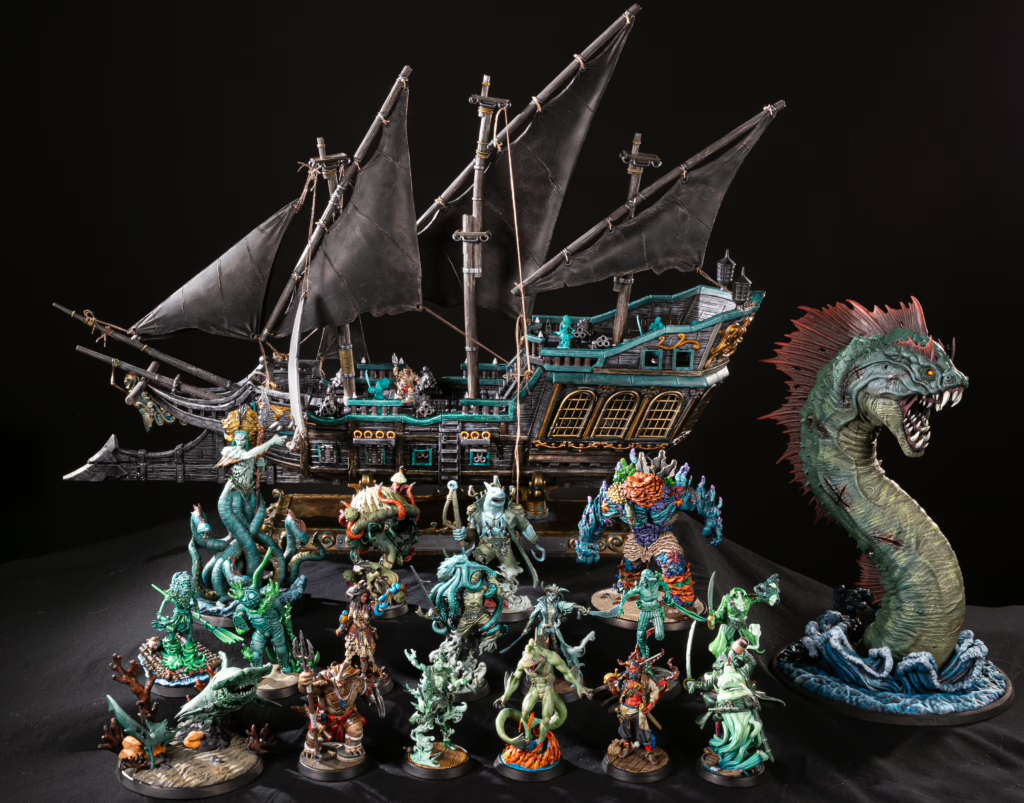
Part 1: The Core Concept – What Actually Is an RPG Class?
An RPG class is a bundle of mechanics tied to a fantasy archetype. It dictates:
- Your Abilities: Do you cast spells, swing a sword, or sneak in shadows?
- Your Role: Are you a tank (absorbing damage), a striker (dealing damage), a controller (manipulating the battlefield), or a supporter (healing and buffing)?
- Your Progression: What new powers do you gain when you reach levels 2, 3, or 10?
Think of it like choosing a major in college. A “Fighter” major focuses on weapons and armor. A “Wizard” major focuses on arcane theory and spellbooks. You can multiclass (take two majors), but for beginners, sticking to one is the best way to decide your role.
D&D vs. Pathfinder: It Is A Philosophical Difference
While the archetypes overlap, the design philosophy differs slightly:
- D&D 5e (The Streamlined Hero): D&D classes are designed to be forgiving and powerful right out of the gate. Subclasses (like “Champion” Fighter or “Evocation” Wizard) usually appear at level 3. The system asks: “What would be cool and easy to run?”
- Pathfinder 2e (The Tactical Expert): Pathfinder classes are deeply customizable from level 1. You get “Class Feats” every even level, allowing you to build a unique character. The system asks: “What makes sense tactically?”
For example, a D&D class, “Fighter,” gets a Second Wind healing ability. A Pathfinder class, “Fighter,” gets access to combat stances and reactive strikes. Both are warriors; one is built for heroic resilience, the other for tactical dominance.
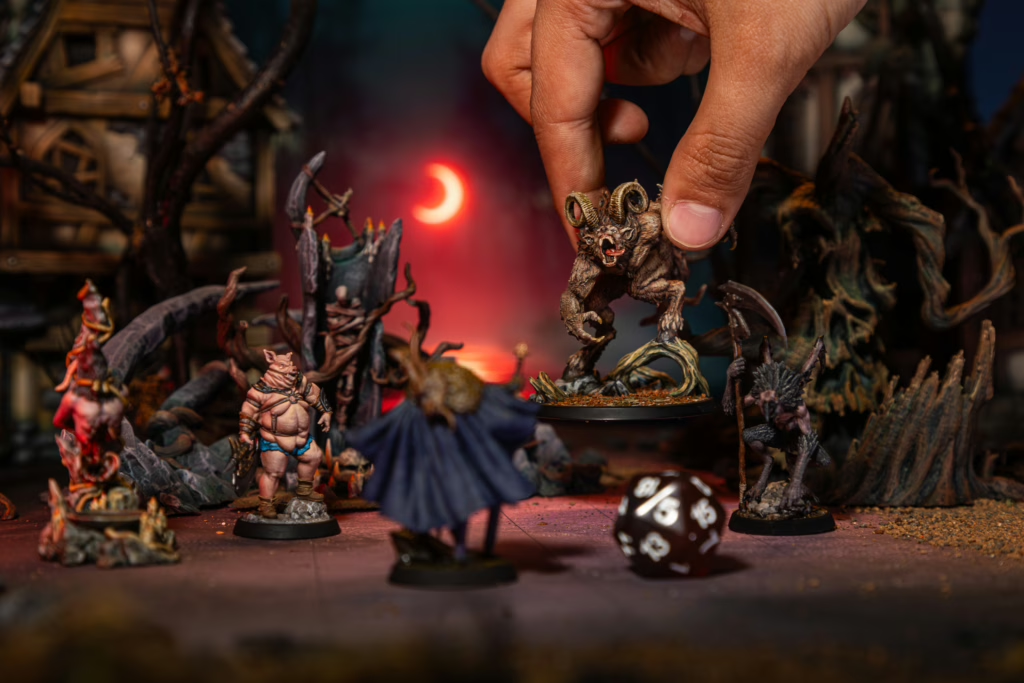
Part 2: The Main Archetypes—A Breakdown of the D&D Classes List & Pathfinder Equivalents
Most RPG classes fall into four broad roles, and here they are ranked by complexity for beginners.
1. The Warriors (Martial Classes)
Role: Frontline combat, high durability, consistent damage.
Best for: Players who want to be in the thick of battle without managing spell slots.
D&D: Fighter, Barbarian, Paladin, Monk
- Fighter (Easy): The master of all weapons. Simple to learn, but hard to master. Action Surge lets you take an extra action.
- Barbarian (Easy): Rage gives you damage resistance and bonus damage. You are a hit point sponge.
- Monk (Easy): Master of unarmed attacks. With Flurry of Blows, you can hit your enemy more than once. The downside is the low health.
- Paladin (Medium): A warrior with divine spells. Famous for “Smite” (burning spell slots for massive damage). Requires managing a few spells.
Pathfinder: Fighter, Barbarian, Champion, Monk
- Fighter (Medium): In PF2e, the Fighter has the highest weapon accuracy. It relies on tactics like “Trip” and “Grapple.”
- Monk (Medium): Very similar to D&D, but has more building and buffing options.
- Barbarian (Easy/Medium): Your Rage gives big damage but lowers your Armor Class (AC). You are a glass cannon.
- Champion (Medium): The equivalent of the Paladin. Focuses on a defensive “Reaction” (like a shield block) to protect allies.
Important to mention that in Pathfinder, you have the Multiple Attack Penalty (MAP, for friends). In D&D, if you’re a Fighter or a Barbarian and want to attack again, you can, no problem, easy peasy. In Pathfinder, it is highly not recommended, and you have more tactical options.
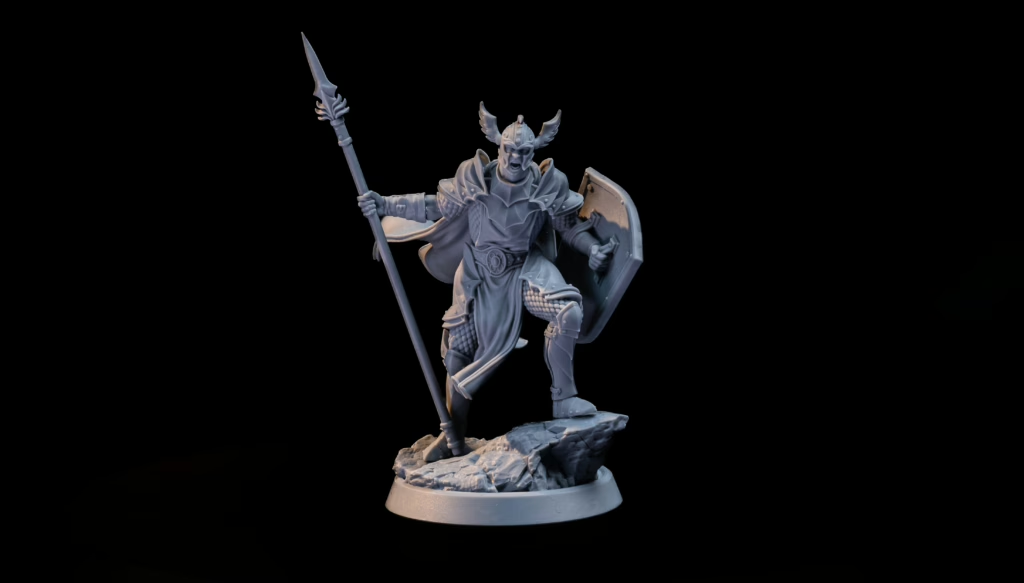
2. The Mages (Spellcasters)
Role: Ranged damage, crowd control, utility.
Best for: Players who love reading spells and solving problems with magic.
D&D: Wizard, Sorcerer, Warlock
- Wizard (Hard): Huge spell list. You prepare spells from a spellbook. High versatility, low health.
- Sorcerer (Medium): Innate magic. Fewer spells known, but you can modify them with “Metamagic” (e.g., casting a spell silently).
- Warlock (Medium): Regains spell slots on a short rest. Relies on the “Eldritch Blast” cantrip. Unique and beginner-friendly if you like simplicity.
Pathfinder: Wizard, Sorcerer, Witch
- Wizard (Hard): Similar to D&D but with more school specialization. You need to manage a spellbook and a familiar.
- Sorcerer (Medium): Bloodline gives unique spells. Spontaneous caster (no preparation).
- Witch (Hard): A caster with a familiar that holds your spellbook. You also get “Hexes” (at-will magical debuffs).
In D&D, try the Warlock (fewer choices). In Pathfinder, the Sorcerer is more forgiving than the Wizard because you don’t prepare spells daily.
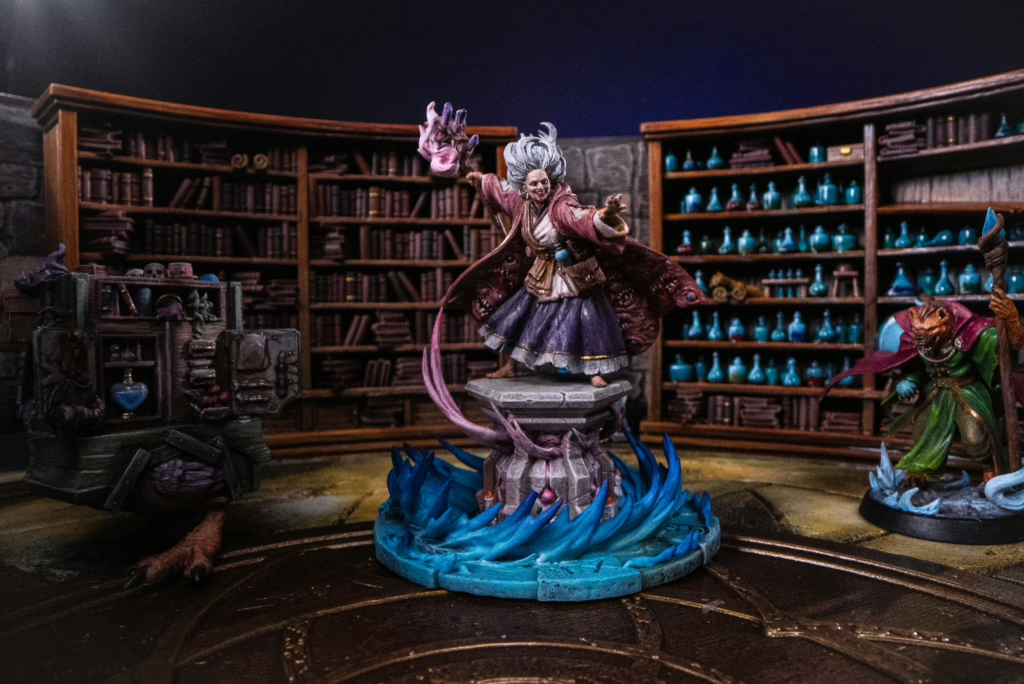
3. The Experts (Skill-Monkeys)
Role: Lockpicking, trap disarming, social interaction, stealth.
Best for: Players who want to shine outside of combat.
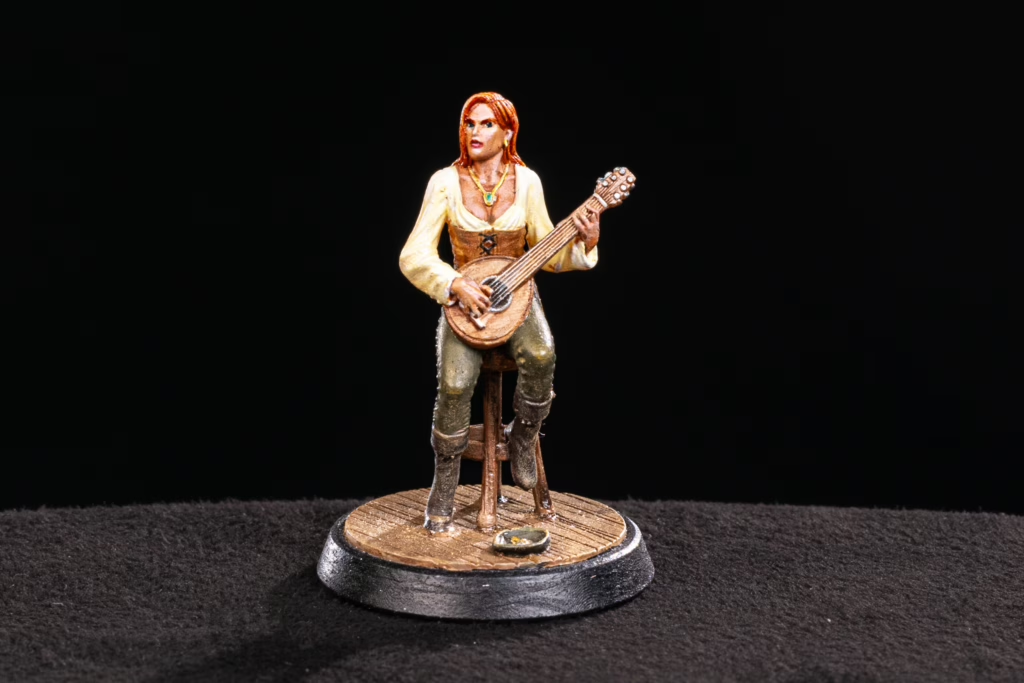
D&D: Rogue, Bard, Ranger
- Rogue (Easy/Medium): Sneak Attack deals high damage when you have advantage. Cunning Action lets you hide or dash as a bonus action.
- Bard (Medium): Full spellcaster focused on buffs and debuffs. Bardic Inspiration gives allies extra dice to roll.
- Ranger (Medium): A hybrid of fighter and druid. Focuses on tracking enemies and archery.
Pathfinder: Rogue, Bard, Ranger, Investigator
- Rogue (Medium): Relies on flanking for Sneak Attack. Has “Surprise Attack” and many skill feats.
- Bard (Harder): Composition Spells affect the whole party. Requires tactical positioning.
In order to decide, ask yourself: Do I want to talk (Bard), sneak (Rogue), survive in nature (Ranger),?
4. The Healers (Divine Support)
Role: Restoring hit points, removing curses, buffing allies.
Best for: Altruistic players who enjoy enabling others.
D&D: Cleric, Druid
- Cleric (Easy/Medium): The classic healer. However, D&D Clerics are also formidable warriors (e.g., Tempest or War domain).
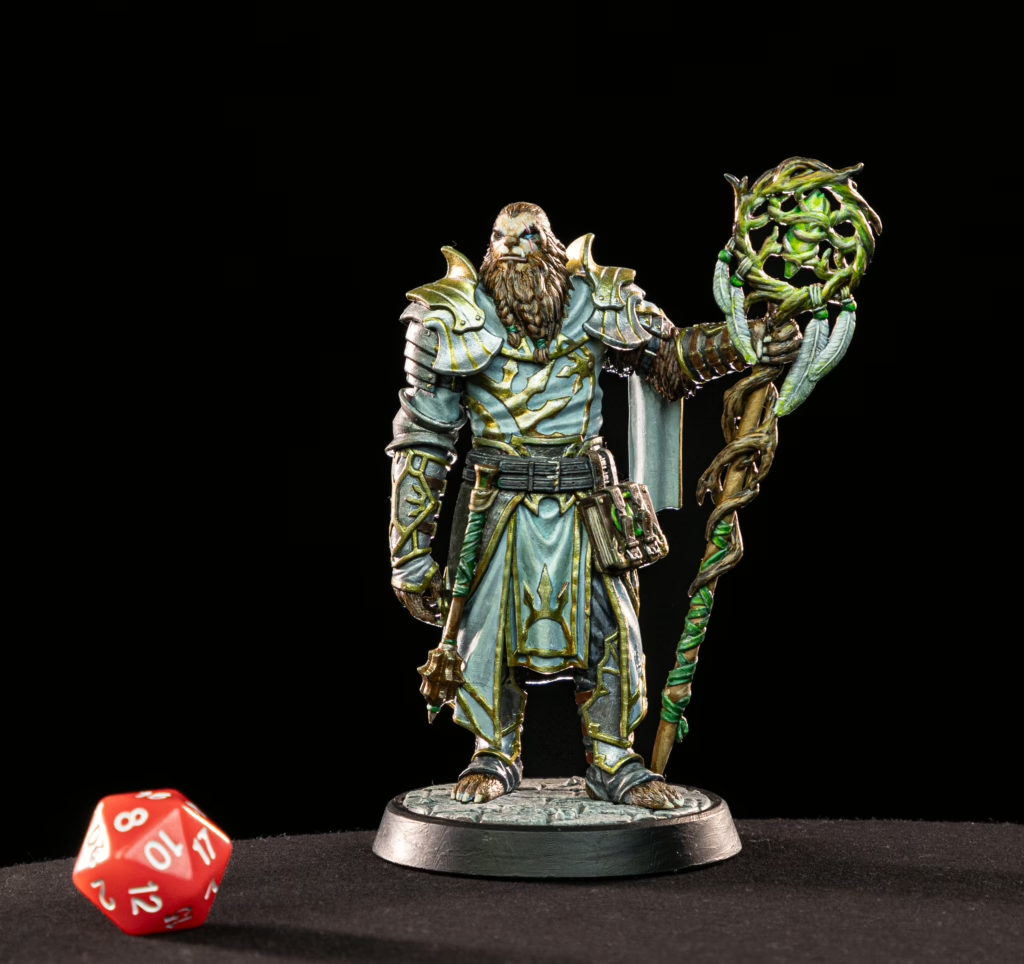
- Druid (Hard): Nature magic. Wild Shape lets you turn into animals. Complex due to managing animal stats and spells.
Pathfinder: Cleric, Druid, Oracle
- Cleric (Medium): Divine Font gives you extra free heal spells. Very strong healer.
- Oracle (Hard): A cursed divine caster. You gain power but suffer a permanent curse (e.g., blindness, frail bones). High roleplay potential.
D&D Cleric is very forgiving. In Pathfinder, the Cleric is the most straightforward healer, while the Oracle is for advanced players.
Part 3: Practical Advice for Beginners – The Simplest Classes to Play in D&D & Pathfinder
If you are a brand new player, you don’t need to read 50 pages of spell descriptions. You need a class that is forgiving and has few trap options.
For Dungeons & Dragons 5e (The Easiest Start)
Here is the D&D classes list ranked by ease of use for a total beginner:
- Fighter (Champion): You crit on a 19 or 20. No complex resources. Just attack.
- Barbarian (Totem Warrior): Rage gives you resistance to almost all damage. You are a tank.
- Rogue (Thief): Cunning Action is simple. Sneak Attack is easy to trigger (just have an ally nearby).
- Warlock (Hexblade): You have only 2 spell slots for most of your career. You mostly cast Eldritch Blast or hit with your sword.
If you’re a beginner, you want to avoid Druid (too many wild shape forms), Wizard (spell preparation is tedious), and Sorcerer (metamagic choices are confusing).
For Pathfinder 2e (The Tactical Start)
Pathfinder is crunchier, so “easy” here means “mechanically transparent.”
The top easy classes in Pathfinder for beginners are:
- Fighter: High accuracy makes the Multiple Attack Penalty (MAP) less punishing. You don’t have spell slots.
- Barbarian: Your instinct gives a clear playstyle. You rage, you smash.
- Rogue (Thief Racket): You add Dexterity to damage. Simple sneak attack triggers.
- Cleric (Cloistered Cleric with Healing Font): You will never run out of heals. It is very clear what your job is.
Avoid Alchemist, Summoner, and Oracle as your first character. They require some system mastery.
Part 5: Bringing Your Class to Life – The Visual Element
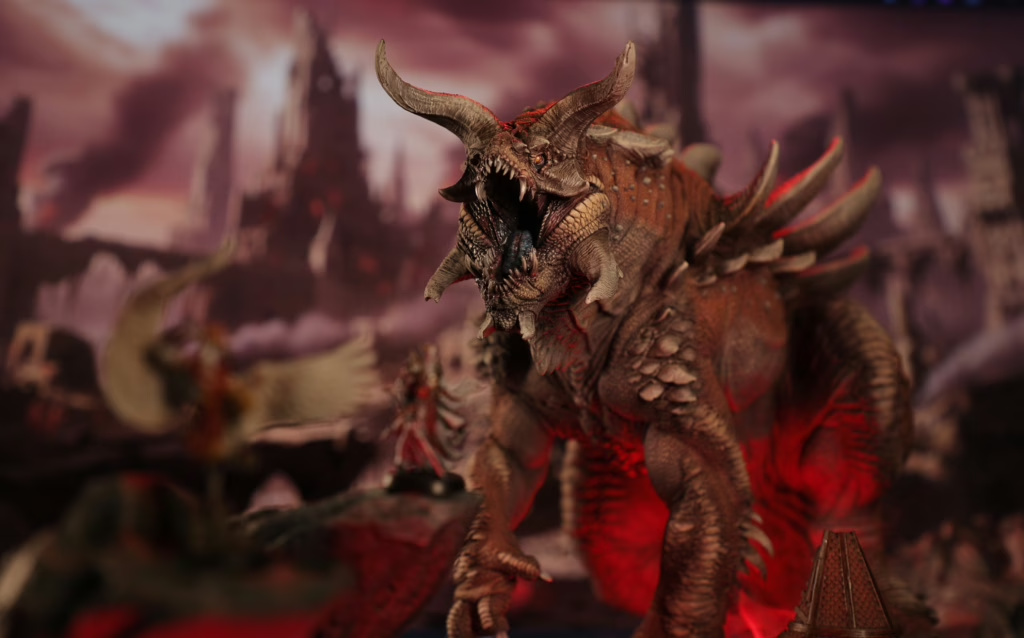
Choosing your RPG class is a mental exercise, but TTRPGs are a physical hobby. You have a character sheet, dice, and hopefully, a miniature. There is a profound psychological shift when you place a painted 3D-printed miniature on a map.
You are no longer just a “Fighter level 3.” You are Valyn, the scarred mercenary with the dragon-shaped pauldron, standing in the breach of a goblin fort.
This is where we enter the scene. Having a high-quality, detailed miniature for your specific class does two things:
- It solidifies your identity. When you look down at a generic token, you forget who you are. When you look at a bespoke mini with a unique pose and gear, you become that character.
- It helps the DM. In a tactical game like Pathfinder, knowing exactly which square the Rogue occupies matters for flanking.
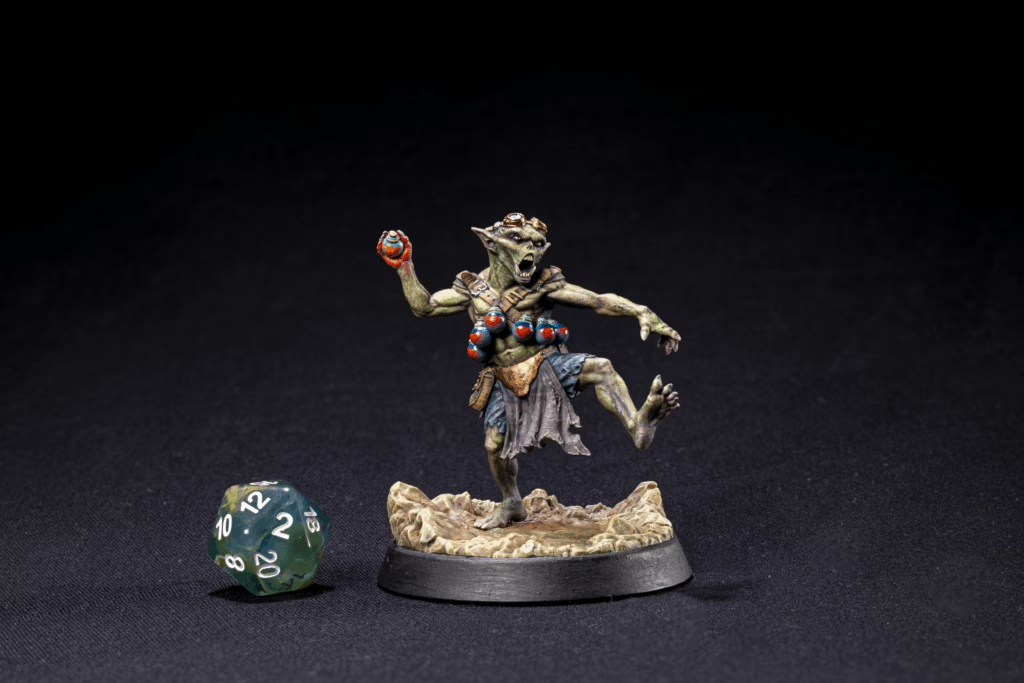
If you are wondering whether you should buy pre-made minis or invest in a printer, check out our detailed guide: Should You Buy or Print Miniatures?. Spoiler alert: for the sheer volume of goblins and heroes a campaign needs, 3D printing is the most cost-effective way to get a miniature for every single D&D class and Pathfinder class you could imagine.
And once you have your minis, you need a proper table. Our guide on How to Upgrade Your D&D Setup teaches you how to build digital maps, use lighting, and create an immersive environment worthy of your new character.
Part 6: Deep Dive – The Pathfinder Classes Ranked by Complexity
Since the Pathfinder classes are often the source of confusion, let’s rank them specifically. Pathfinder 2e Remastered has incredible depth. Here we ranked from “Play this at level 1” to “Wait until you have a PhD in Golarion.”
Tier 1 (Beginner Friendly):
- Fighter – Straightforward. Hit things. Use “Slam Down” (Trip + Strike).
- Rogue – Flank to Sneak Attack. Use skills.
- Cleric – Heal, cast Bless, repeat.
Tier 2 (Intermediate – Needs some reading):
4. Barbarian – Managing AC penalty and Rage timing.
5. Ranger – Hunt Prey, choose Flurry (many attacks) or Precision (one big hit).
6. Bard – Managing Composition cantrips and Lingering Composition.
Tier 3 (Advanced – System Mastery Required):
7. Wizard – Spell schools, scroll crafting, and the 4-slot spell progression.
8. Druid – Wild Shape forms require a second character sheet.
9. Monk – Stances give different bonuses; high mobility requires tactical play.
Tier 4 (Expert Only):
10. Alchemist – You must know the item list by heart. You craft bombs, elixirs, and poisons on the fly.
11. Summoner – You control two characters (you and your eidolon) with shared HP. Very complex action economy.
12. Oracle – Your curse gets worse as you level. You must balance power versus debuffs.
Part 7: The “Multiclass” Question (Should you mix?)
In both D&D and Pathfinder, you can take levels in multiple classes. For example, a “Fighter/Wizard” (Spellsword) or “Rogue/Cleric” (Divine Trickster).
The Beginner Rule: Do not multiclass your first character.
- In D&D: Multiclassing can ruin your progression. If you take 1 level of Wizard on your Fighter, you delay your “Extra Attack” feature.
- In Pathfinder: You don’t actually “multiclass” traditionally. You take “Archetype Feats” instead; that gives you some other class feats. This is safer but still adds complexity.
But you have free will, so, if you still want to build a multiclass character, at least play a single class from levels 1 to 5. By then, you will know how RPG classes work well enough to decide if you want to branch out.
Conclusion: Your First Session Awaits
We have covered a lot of ground. We defined what the differences between D&D classes and their Pathfinder counterparts are.
To dive deeper into the Pathfinder system specifically, do not miss our complete Ultimate Guide on Pathfinder 2e System. It breaks down the three-action economy and the Remastered rules in even more detail.
And if you are interested in learning how to be a DM, and get to know all the classes, we also got you in our Free Game Master Guide.
The dice are waiting. The dungeon is dark. Go find your class.
Loot Studios can help you tell your story through highly detailed minis, statues, terrains, busts, and props. Sign up for Loot and choose your favorite bundles from our library of more than 130 options. You can also learn more about our printing and painting process by checking our YouTube Channel.

Luiza Romagnoli is an autistic Brazilian woman, journalist, and obsessed with RPG. She has been writing since she can remember, but it was in 2017, posting texts on Instagram, that she began to take it seriously. She has a poetry book published by Patuá Publishing House: sirva o chá. Nowadays, Luiza is a multi-hyphenned professional: she’s a writer, translator, English and Spanish Teacher, and has an RPG stationery store: Papelaria do Aurel. Although having all these jobs almost leave no room for her D&D sessions, she still loves them.