How to Play DnD: The Complete Beginner’s Guide to Tabletop RPGs

So, you’re curious about Dungeons & Dragons. You’ve seen people blabbing about how to play DnD is so fun. You’ve seen people roll dice on streaming shows, heard coworkers whisper about “critical hits,” and maybe even glimpsed a set of strange-looking dice in a friend’s bag. There’s a part of you that thinks, “That looks like fun.” But then the doubts creep in: “Isn’t it incredibly complicated? Don’t you need to memorize hundreds of pages of rules? What if I’m not creative enough?”
Let’s clear the air right now.
While playing DnD involves rules—just like any game from poker to soccer—the core of the experience is surprisingly simple. At its heart, learning how to play DnD (and other tabletop RPG systems) is just rediscovering the childhood joy of “playing pretend,” but with a bit of structure provided by rules and dice to keep things fair and exciting. You don’t need to be a novelist, a comedian, or a rules lawyer. You just need curiosity and a willingness to have fun with friends.
This comprehensive guide will walk you through everything you need to know to take your first steps into the vast, wonderful world of tabletop role-playing games. By the end, you’ll understand the game’s structure, how to create a character, what happens during a session, and where to find your first group.
What Exactly Is D&D?
Before diving into mechanics, you need to understand what you’re actually doing around that table.
Dungeons & Dragons (and similar games) is collaborative storytelling. Like creating a fanfiction with your friends. Imagine your favorite fantasy movie—The Lord of the Rings, The Witcher, Game of Thrones. Now imagine that instead of watching it, you’re one of the characters. You decide what they say, how they react to danger, and what risks they take. But unlike writing a novel alone, you’re building this story with your friends in real-time, and nobody knows exactly how it will end.
The game creates emergent narratives—unpredictable, hilarious, and dramatic moments that arise naturally from the interaction between player choices and dice rolls. One session might feature a tense negotiation with a dragon; the next might devolve into your party trying to figure out who accidentally polymorphed the innkeeper into a sheep. Oh, that was fun…
The Two Roles at the Table
Every game of D&D has a clear division of responsibility:
The Dungeon Master (DM) is the game’s narrator, referee, and world-builder. They:
- Describe the environments you explore
- Portray every Non-Player Character (NPC) you meet—from friendly innkeepers to terrifying liches
- Interpret the rules and decide when dice rolls are needed
- Design (or run pre-written) adventures and campaigns
- Keep the story moving forward, adapting to whatever wild ideas the players have
Being a DM is incredibly rewarding, but it does require more preparation and mental energy than being a player. If you want to understand this role better, check out our free Game Master Guide to learn the ropes.
The Players are the stars of the story. Each player creates one character—their avatar in the game world. As a player, you:
- Decide your character’s actions, words, and personality
- Roll dice to determine whether your attempted actions succeed
- Work with the other players to overcome challenges
- Develop your character’s story over time

The Essential Tools: What You Actually Need to Start
One of the biggest misconceptions about how to play DnD is that you need to invest heavily in books, accessories, and miniatures before your first session. And yes, you can, but not really. Here’s the truth about what’s essential versus what’s optional:
Absolutely Essential
1. The Core Rules (Free!)
You don’t need to buy the three core rulebooks (Player’s Handbook, Dungeon Master’s Guide, Monster Manual) to start. Wizards of the Coast provides the Basic Rules as a free PDF download. These contain everything you need to create characters and run games up to level 20, though with fewer options than the full books. Many other RPG systems also offer free “quickstart” rules.
2. A Character Sheet
This is your character’s resume. It tracks their stats, skills, equipment, abilities, and backstory. You can find free printable PDFs everywhere or use digital tools like D&D Beyond to automate the math.
3. Dice
This is the iconic part, and for good reason. D&D uses a specific set of polyhedral dice:
- d4 (4-sided): Often used for small damage rolls or certain spells
- d6 (6-sided): Your standard cube, used for many weapons and abilities
- d8 (8-sided): Common for medium weapons and some class features
- d10 (10-sided): Used for certain damage rolls and percentage dice (when rolled with another d10)
- d12 (12-sided): Less common, but favored by barbarians for big weapon damage
- d20 (20-sided): The star of the show. You’ll roll this for almost everything: attack rolls, skill checks, and saving throws.
The rule is simple: the DM tells you what to roll, you roll it, add any relevant modifiers, and announce the total. If you want to explore other dice systems beyond standard D&D, our guide on Choosing Your TTRPG Dice Systems covers games that use only d6s, dice pools, or even no dice at all.
5. Pencil and Paper
To track your character’s hit points, inventory, and notes from the session.
Highly Recommended (But Not Required)
The Core Rulebooks: Once you’re hooked, the Player’s Handbook, Dungeon Master’s Guide, and Monster Manual offer exponentially more options for characters, magic items, and creatures.
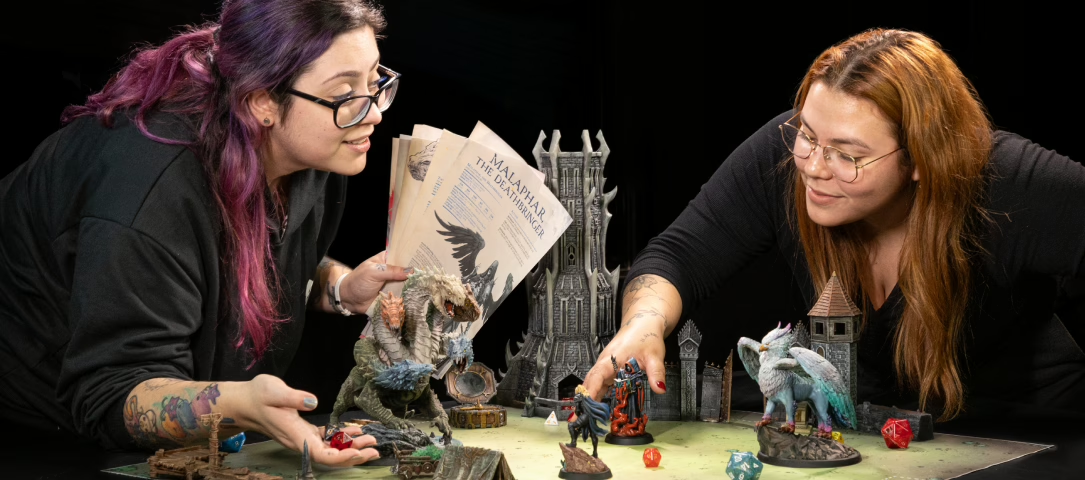
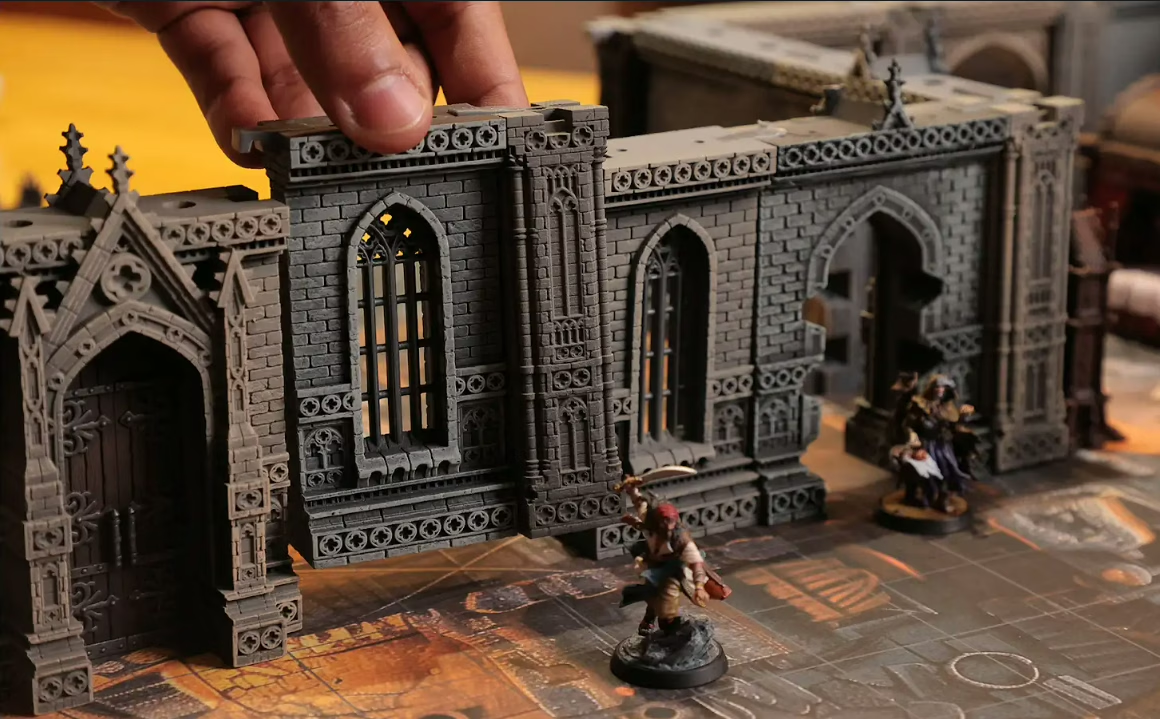
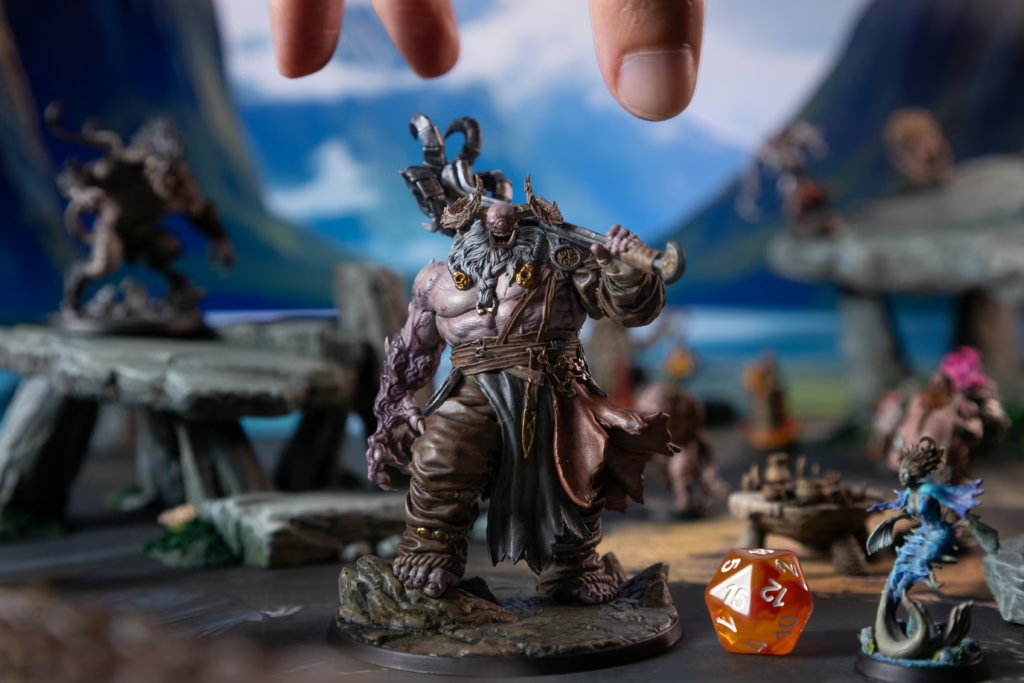
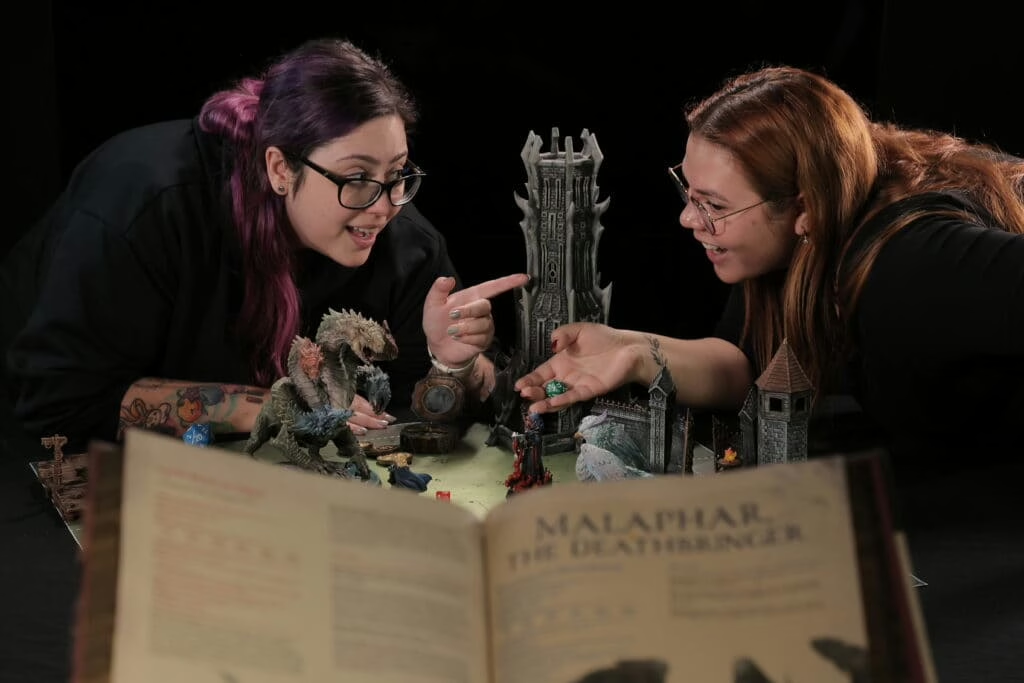
Miniatures and Maps: While you can play entirely in the “theater of the mind,” miniatures on a grid map add a tactile, visual dimension to combat. Suddenly, you can see how close you are to the dragon’s terrifying breath weapon. Miniatures transform abstract positioning into a dynamic, engaging tactical puzzle. They make an already great game absolutely unforgettable. If you’re curious about incorporating them, our guide on RPG Miniatures: From D&D to 3D Printing explores how to get started.

Character Creation: Building Your Hero
Step 1: The High Concept
Before looking at any rules, ask yourself: “What kind of character sounds fun to play?” Don’t worry about optimization yet. Just pick an archetype that excites you.
Do you want to be:
- A noble knight sworn to an oath?
- A sneaky thief with a heart of gold?
- A bookish wizard who’s never met a problem they couldn’t solve with fire?
- A charismatic performer who talks their way out of trouble?
- A grizzled hunter who’s at home in the wilderness?
Here you can go wild! Your answer will guide everything else.
Step 2: Choose Your Race (Species)
Your character’s race provides inherent abilities and shapes how the world perceives them. The options are vast, but here are the most common:
- Human: The most adaptable and versatile.
- Elf: Graceful, long-lived, and connected to nature or magic.
- Dwarf: Sturdy, resilient, and master craftspeople.
- Halfling: Small, lucky, and brave.
- Gnome: Curious, inventive, and magical. They’re smaller than dwarves but just as resilient.
- Half-Elf: Blend human adaptability with elven grace.
- Dragonborn: Draconic humanoids with elemental breath weapons
- Tiefling: Humanoids with infernal heritage
- Goliath: Tall, mountain-dwelling people built for athleticism and survival.
For deeper dives into specific ancestries, explore our articles on Exploring RPG Races: Elves , Exploring RPG Races: Dwarves , and Exploring RPG Races: Halflings .
Step 3: Choose Your Class
Your class is your character’s profession and determines their primary abilities. This is the most consequential choice you’ll make. Here, I designed a table just for you:
| Class | Role | Key Features |
| Fighter | Combat specialist | Multiple attacks, action surge, weapon mastery |
| Wizard | Arcane spellcaster | Extensive spell list, ritual casting, arcane tradition |
| Rogue | Skill expert, stealth | Sneak attack, expertise, cunning action |
| Cleric | Divine healer, warrior | Domain abilities, turn undead, divine magic |
| Paladin | Holy warrior | Smite evil, auras, healing, oath abilities |
| Ranger | Wilderness expert | Favored enemy, tracking, fighting style, spells |
| Barbarian | Primal warrior | Rage, unarmored defense, reckless attack |
| Bard | Skillful performer | Bardic inspiration, spells, expertise, jack of all trades |
| Sorcerer | Innate spellcaster | Metamagic, sorcerous origin, limited spells known |
| Warlock | Pact-bound caster | Eldritch blast, invocations, pact boon, limited slots |
| Druid | Nature priest | Wild shape, nature magic, circle abilities |
| Monk | Martial artist | Ki points, unarmored movement, stunning strike |
For detailed breakdowns, check our class guides: Exploring RPG Classes: The Fighter, Exploring RPG Classes: The Wizard , Exploring RPG Classes: The Rogue , Exploring RPG Classes: The Paladin , Exploring RPG Classes: The Bard , and Exploring RPG Classes: The Monk .
Step 4: Add Personality and Backstory
This is where your character comes alive. A compelling character needs more than just stats—they need dreams, fears, quirks, and relationships.
Ask yourself:
- What does my character want more than anything?
- What are they afraid of?
- Do they have any annoying habits or mannerisms?
- Who, if anyone, are they leaving behind?
- What’s their moral compass? Are they selfless, greedy, honorable, or chaotic?
A simple goal is often the best starting point. “I want to find my lost brother” or “I’m seeking revenge on the goblins who destroyed my village” gives the DM hooks to build stories around you.
For a complete walkthrough of this process, our guide RPG: Character Creation for Dummies provides 10 questions to help you discover who your character truly is.
Step 5: Assign Ability Scores
Your character has six core abilities that define their raw potential:
- Strength (STR): Physical power, melee attacks, carrying capacity
- Dexterity (DEX): Agility, reflexes, ranged attacks, armor class
- Constitution (CON): Health, stamina, hit points
- Intelligence (INT): Reasoning, memory, wizard spellcasting
- Wisdom (WIS): Perception, intuition, cleric/druid spellcasting
- Charisma (CHA): Personality, force of will, bard/sorcerer/warlock spellcasting
You generate these scores using one of three methods:
- Standard Array: 15, 14, 13, 12, 10, 8 – assign as you wish
- Point Buy: Start with all 8s and spend points to increase them
- Rolling: Roll 4d6 and drop the lowest. Do this six times (ask your DM first!).
And don’t worry about filling out your whole character sheet by yourself. You can always ask a friend or your DM to help you deal with stats, feats, and skills.
If you still feel you need more directions, remember to check our Character Creation for Dummies (and we mean that in the kindest way possible).
Game Structure: How a Session Actually Works
Now that you have a character, what happens when you sit down to play? A typical D&D session follows this rhythm:
1. The DM Sets the Scene
The DM describes where your characters are and what’s happening around them. This might be:
“After traveling through the dense forest for three days, you finally spot the ruins of the Lost Temple of Savras. Crumbling stone columns rise from the overgrowth, and a massive stone door, covered in faded runes, stands half-open before you. An unnatural silence hangs in the air—not even birds sing here. What do you do?”
2. The Players React
This is your cue. You describe what your character does. The beauty of the game is that you can try anything—within reason.
3. The DM Calls for Rolls (When Necessary)
Not every action requires a dice roll. Walking across a room? Automatic. Picking a complex lock while a goblin shoots arrows at you? Definitely a roll.
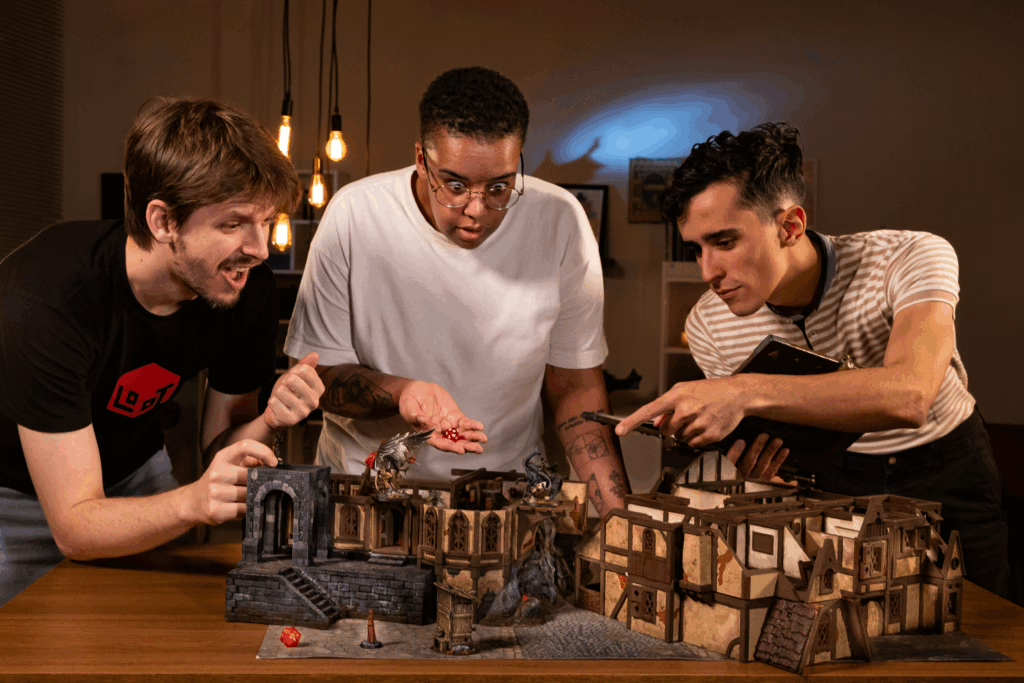
The DM will tell you what to roll. Most often, it’s a d20 + relevant ability modifier + proficiency bonus (if you’re trained in that skill) .
- Skill Checks: Used for tasks like sneaking (Stealth), persuading (Persuasion), or remembering lore (History). The DM sets a Difficulty Class (DC) — a target number you need to meet or beat.
- Saving Throws: Used to resist harmful effects, like dodging a fireball (Dexterity save) or resisting a poison (Constitution save).
- Attack Rolls: Used to hit enemies in combat. You roll a d20, add your attack bonus, and try to beat the target’s Armor Class (AC).
4. The DM Describes the Outcome
Based on your roll, the DM narrates what happens. Success means your character accomplishes their goal (often with style). Failure means things get more complicated—the lock jams, the guard spots you, or you slip and fall.
5. Combat Changes the Rhythm
When a fight breaks out, the game shifts into a structured turn-based mode:
- Initiative: Everyone rolls a d20 + Dexterity modifier. This determines the order of turns for the entire combat.
- Turns: On your turn, you can move up to your speed and take one action (attack, cast a spell, etc.), plus possibly a bonus action and a reaction.
- Round: Once everyone has taken a turn, the round ends, and a new round begins with the same initiative order.
- Victory or Defeat: Combat continues until one side is dead, surrendered, or fled.
Where to Play: Finding Your First Group
You’ve got the knowledge. Now you need a table. Here are the best ways to find one:
In-Person Options
- Local Game Stores: This is the best option for beginners. Most stores host “Adventurers League” or open game nights specifically designed for new players. You can simply walk in, say, “I’m new, can I join?” and they’ll help you.
- Friends and Family: Ask around! You might be surprised who’s curious or who played years ago. Be the organizer—buy the snacks, offer to learn the rules first, and invite them over.
- Conventions: Gaming conventions often have “learn to play” tables running constantly.
Online Options
- Roll20 and Foundry VTT: These virtual tabletops let you play with maps, tokens, and dice rolling built-in. Their looking-for-group forums are very active.
- Discord Communities: Many D&D servers host games and offer spaces to find players.
- r/lfg (Reddit): The “Looking For Group” subreddit is constantly filled with players and DMs seeking groups, both online and in-person.
Common Beginner Fears (And Why You Should Ignore Them)
“I’m Not Creative Enough”
You don’t need to be a novelist. You just need to answer the question “What does my character do?” in each situation. Start simple: “I attack the goblin.” “I look for traps.” As you get comfortable, you’ll naturally start adding flavor: “I swing my axe at the goblin while shouting a dwarven battle cry!”
“I Don’t Know All the Rules”
Bold of you to think we all do. The rulebooks are reference manuals, not textbooks you must memorize. The only rule that truly matters is: have fun. When in doubt, the DM makes a ruling, you roll some dice, and you keep playing. You can look up the “correct” rule after the session.
“I’ll Look Silly Doing a Voice”
Then don’t do a voice! Many fantastic roleplayers simply describe what their character says instead of acting it out. “My character tries to intimidate the guard by threatening his family” works perfectly well. Roleplay is about choices, not accents.
“I Don’t Know How to Build an Optimized Character”
Optimization is optional. The game is designed so that even “suboptimal” characters can contribute and have fun. The most memorable characters are often the ones with quirks and flaws, not the mathematically perfect ones. Play what excites you.
The Golden Rule: It’s a Story, Not a Competition
Forget the idea of “winning” the game. The entire purpose of a TTRPG is to collaboratively tell a thrilling story. Everything else—the rules, the spells, the monster stat blocks—is just there to support that simple, powerful loop.
Why Miniatures Make It Better
You can absolutely play using just your imagination. But placing miniatures on a grid map transforms the game. Suddenly, the battle becomes tangible. You can see if the goblin is within range of your fireball. Miniatures bridge the gap between imagination and reality, making the action clearer and the strategy more engaging. They turn a good session into an unforgettable one. Trust me.
Ready for Your First Session?
The world of tabletop RPGs is incredibly welcoming. You’ll laugh, you’ll face impossible odds, and you’ll create stories you’ll tell for years. To help you on your journey, especially if you’re the one taking on the exciting role of DM, we have some free resources to get you started.
Understand a little more about how DMs work with our free Game Master Guide.
Stop getting lost with your magic items; here’s a full guide to help you know them better.
So, gather your friends, grab some dice, and get ready to roll for initiative. Your adventure awaits!
Loot Studios can help you tell your story through highly detailed minis, statues, terrains, busts, and props. Sign up for Loot and choose your favorite bundles from our library of more than 130 options. You can also learn more about our printing and painting process by checking our YouTube Channel.

Luiza Romagnoli is an autistic Brazilian woman, journalist, and obsessed with RPG. She has been writing since she can remember, but it was in 2017, posting texts on Instagram, that she began to take it seriously. She has a poetry book published by Patuá Publishing House: sirva o chá. Nowadays, Luiza is a multi-hyphenned professional: she’s a writer, translator, English and Spanish Teacher, and has an RPG stationery store: Papelaria do Aurel. Although having all these jobs almost leave no room for her D&D sessions, she still loves them.