FDM vs Resin, The Ultimate Guide in 2026
What Kind of Creator Are You Becoming?
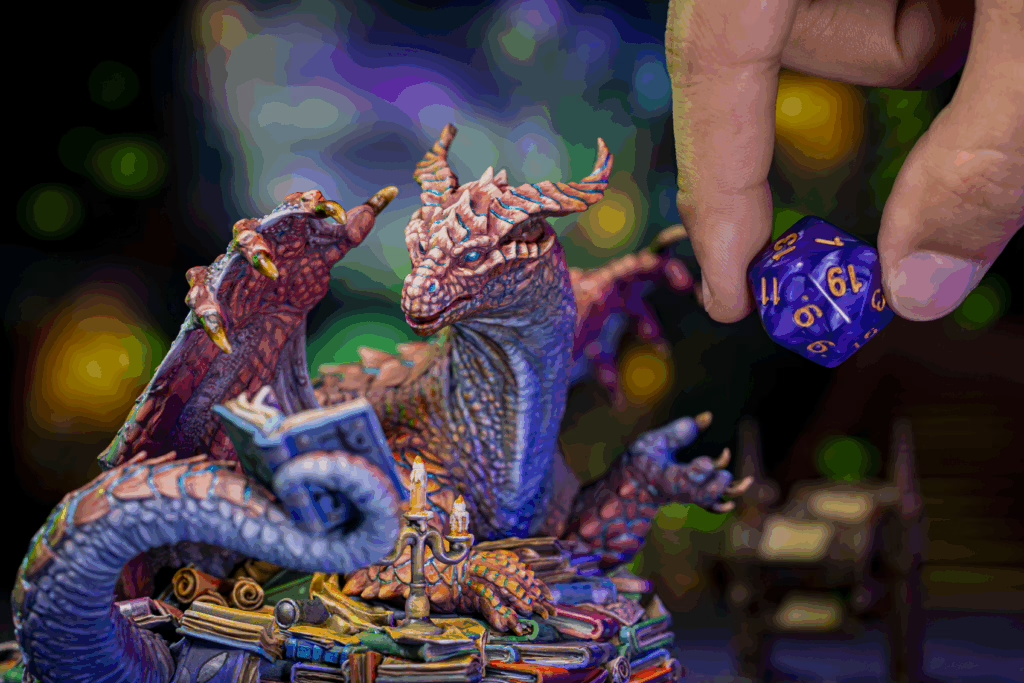
You’ve seen the photos: a dragon so detailed you can see the scars on its snout, or a sprawling, multi-level dungeon that makes your players finally put their phones away and lean into the story. That’s the “hook” moment. It’s when you realize that your table is about to evolve from a flat map into a physical world.
But then comes the choice that stalls most DMs and players:
“Do I go FDM or Resin? “
I’ve spent more nights than I’ll admit cleaning cured gunk out of a vat and untangling “spaghetti” from a failed filament print. If you’re feeling intimidated, take a breath. I’ve made all the expensive mistakes so you don’t have to. Choosing a printer isn’t about chasing specs; it’s about deciding what kind of immersion you want to craft for your players.
The Two Creative Paths: Stage vs. Legend
Before we talk about layer heights, we need to talk about your dream session. In 2026, 3D printing is no longer a technical hurdle—it’s a creative identity. Which one calls to you?
The World Builder (FDM)
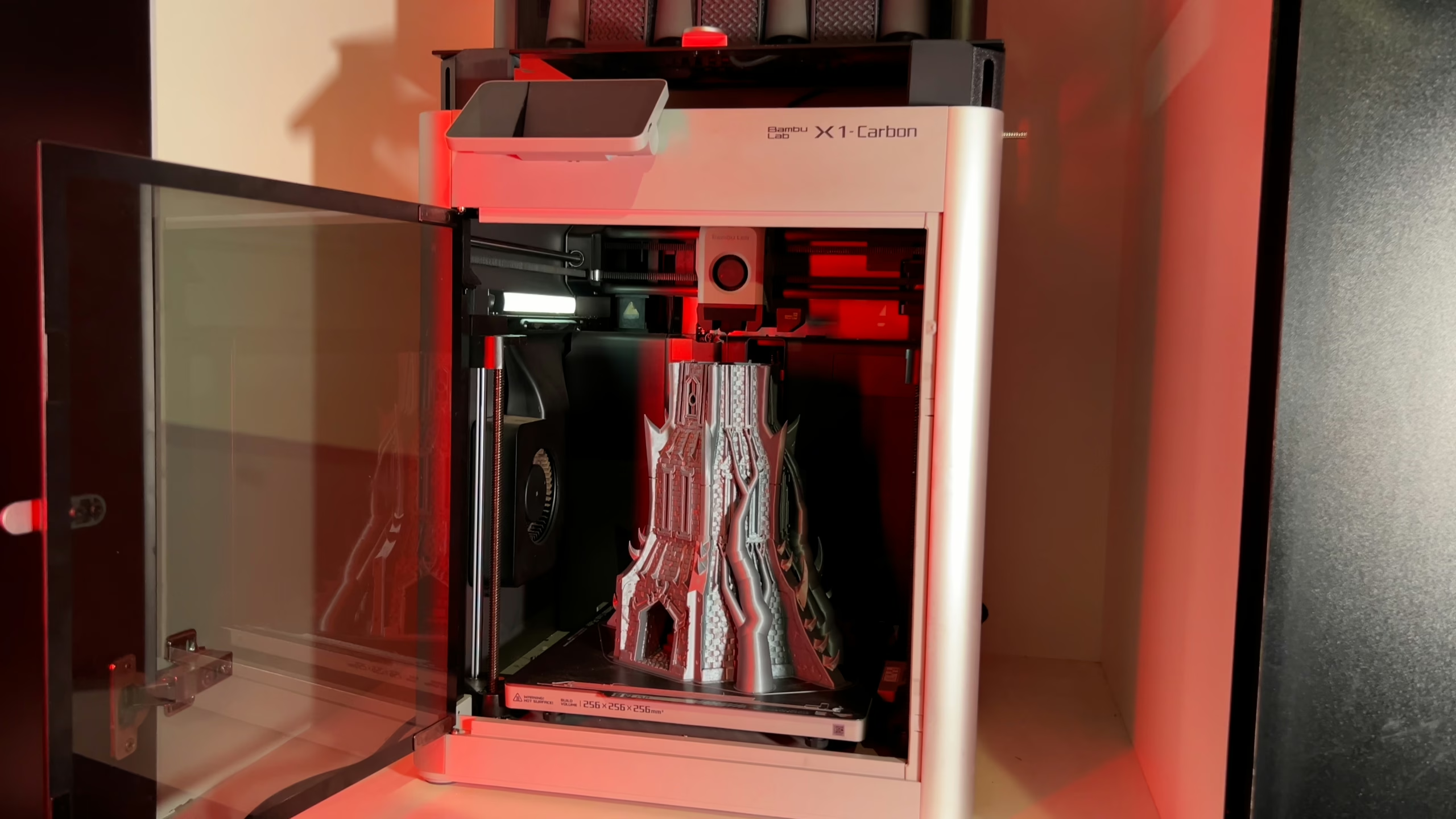
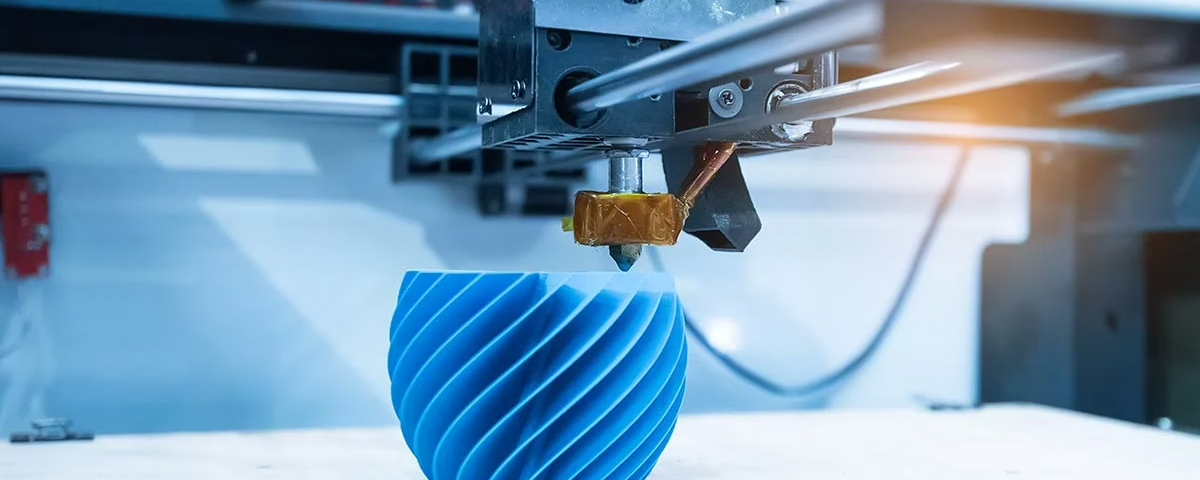
If your heart beats for massive castle walls, modular taverns, and huge terrain pieces that fill a battlemap, you are a World Builder. FDM (Fused Deposition Modeling) uses a spool of plastic filament to build layer by layer. It is the architect’s tool.
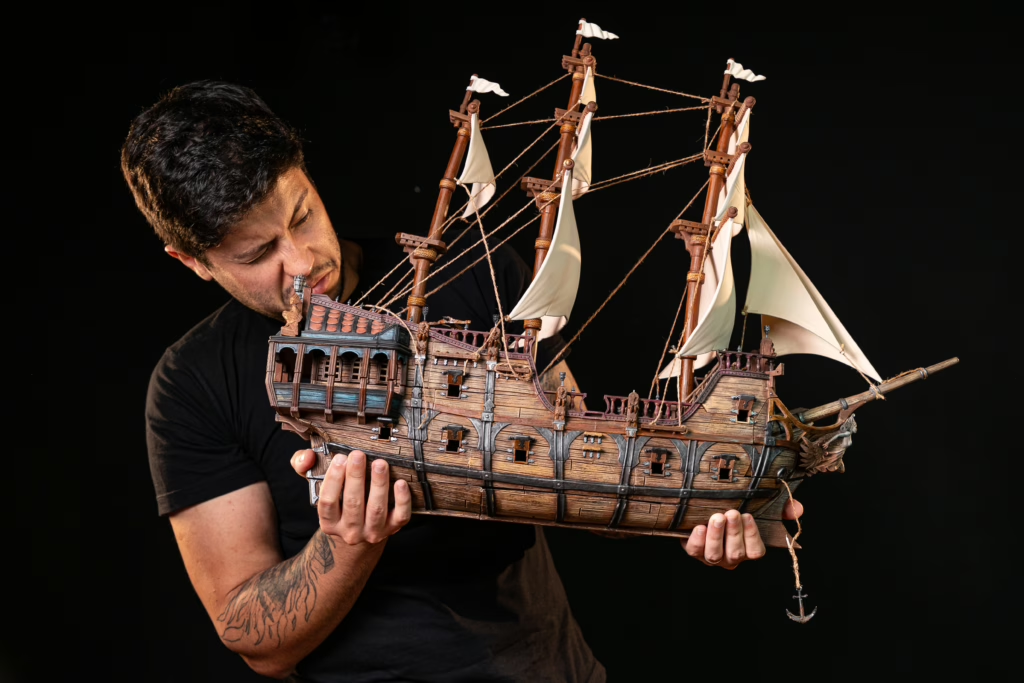
- Your Table: You build the ruins of ancient civilizations, massive ships, and winding sewer systems.
- The Experience: You value scale and presence. When you drop a 15-inch tower onto the table, the atmosphere changes instantly.
- The Reality: It’s a “set it and forget it” workflow. Very little mess, no chemicals—just the satisfying hum of a machine building the stage where legends happen.
Check out our curated list of the Best FDM Printers for RPG Terrain and start laying the foundations of your next kingdom.
The Detail Sculptor (Resin)
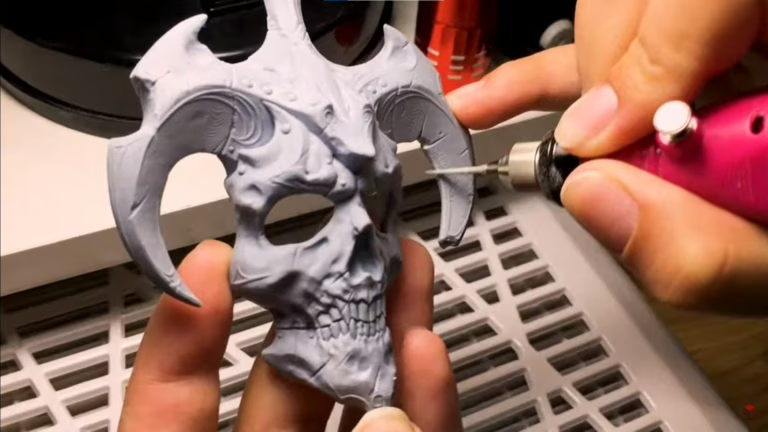
If you care about the individual nose-rings on your goblins or the filigree on a Paladin’s plate armor, you are a Detail Sculptor. Resin printing uses UV light to cure liquid plastic into hyper-sharp shapes. It is the jeweler’s tool.
- Your Table: You print 32mm heroes, terrifying boss monsters, and display-quality busts that your players will keep on their shelves for years.
- The Experience: You want the “wow” factor of a miniature that looks better than anything you could buy in a store. You want the facial expressions to tell the story before you even speak.
- The Reality: It’s more hands-on. You’ll be dealing with gloves and a cleaning process, but the payoff is absolute, crisp perfection that FDM simply can’t match.
We’ve tested the top machines so you don’t have to. Find your perfect match in our guide to the Best Resin Printers for Miniatures.
Seeing the Difference in Action
Sometimes, words don’t do the resolution difference justice. Our host Giuly put both technologies to the test, printing the exact same pieces to compare time, cost, and detail. In this video, we break down how FDM excels at massive props like dice towers while Resin wins the “detail sprint” for 75mm heroes.
FDM vs Resin: The Practical Reality
| The Trade-off | FDM (Filament) | Resin (SLA/MSLA) |
| Primary Goal | Terrain & Massive Environments | Miniatures & Hyper-Detail |
| Table Impact | Structural immersion and scale | Visual storytelling and “hero” moments |
| Post-Processing | Snap off supports; ready to play | Wash in IPA + UV Curing (Required) |
| Durability | High; these pieces survive drops | Can be delicate; requires “tough” resins |
Normalizing the “Failed Print”
Here is something every veteran knows: everyone fails. You will find a “spaghetti monster” on your FDM bed, or a resin print that didn’t stick to the plate. In our hobby, we don’t call those failures; we call them “battle debris.” A failed terrain piece makes a great ruined wall. A failed mini is just a corpse for a dungeon floor. Don’t let the fear of a bad print stop your progress—learning the machine is just the first quest in the campaign.
A Note on Resin Safety: Authoritative and Calm
Resin is a chemical, and it deserves respect, not fear. To keep your hobby space safe and professional, follow the “Looter’s Protocol”:
- Skin Protection: Always wear nitrile gloves. If resin touches your skin, wash it with soap and water immediately.
- Airflow: Print in a well-ventilated room or use a dedicated enclosure with an air filter.
- Containment: Keep a tidy “wet zone” for your IPA washes. Once you have a routine, it feels no different than cleaning your brushes after a painting session.
If you want to know more about the processes of resin 3D printing, we have a full (and totally free) course that teaches you to go from ZERO TO HERO. Check it here!
Quick Guidance for the New Creator
Is Resin or FDM better for 3D printing D&D minis?
If you want the industry-standard “retail” look for 28mm-32mm scale miniatures, Resin is the choice. FDM is incredible for terrain, but it struggles to capture the fine facial details and sharp weapons of a small hero.
Can I use an FDM printer for miniatures at all?
Yes, but manage your expectations. In 2026, FDM printers are much faster, but you will still see slight layer lines. It’s perfect for “horde” monsters (like zombies or skeletons) where the sheer number of minis matters more than individual detail.
What’s the best 3D printer for RPG terrain?
FDM is the undisputed king of terrain. It’s much cheaper per pound of plastic, and you can print massive, structural pieces without worrying about them being too heavy or brittle.
Your Journey Is Just Beginning
Most creators eventually find that a hybrid hobby is the ultimate goal—using FDM to build the world and Resin to populate it with legends. But don’t feel you have to do it all at once. Pick the path that matches the dream you have for your next Friday night session.
If you’re ready to see the difference for yourself, grab our 3D Printing Hero. It’s a free file designed to show off exactly what a high-detail sculpt looks like when it hits the resin.
Which creator are you? Let’s find the right machine and start building your legacy.
Loot Studios can help you paint highly detailed minis, statues, terrains and props. Choose your favorite bundle from our previous releases or sign up for Fantasy or Sci-Fi to receive a new bundle every month. You can also check out some tips on our YouTube Channel.

Robert, also known as Rob, is an artist, English teacher, and lifelong RPG enthusiast. When he’s not sketching worlds or guiding learners through language, he’s diving into dice-rolling adventures and uncovering the magic that makes tabletop storytelling unforgettable. Fuelled by imagination and curiosity, Rob has spent years immersed in the RPG community, studying its stories, creatures, and creativity. He currently works in the marketing department at Loot Studios, where his passion for fantasy, minis, and the RPG universe fuels everything he does. Always with one foot in the real world and one in the realms of adventure, Rob celebrates art, language, and the joy of bringing ideas to life, whether at the table, in class, or behind the scenes.