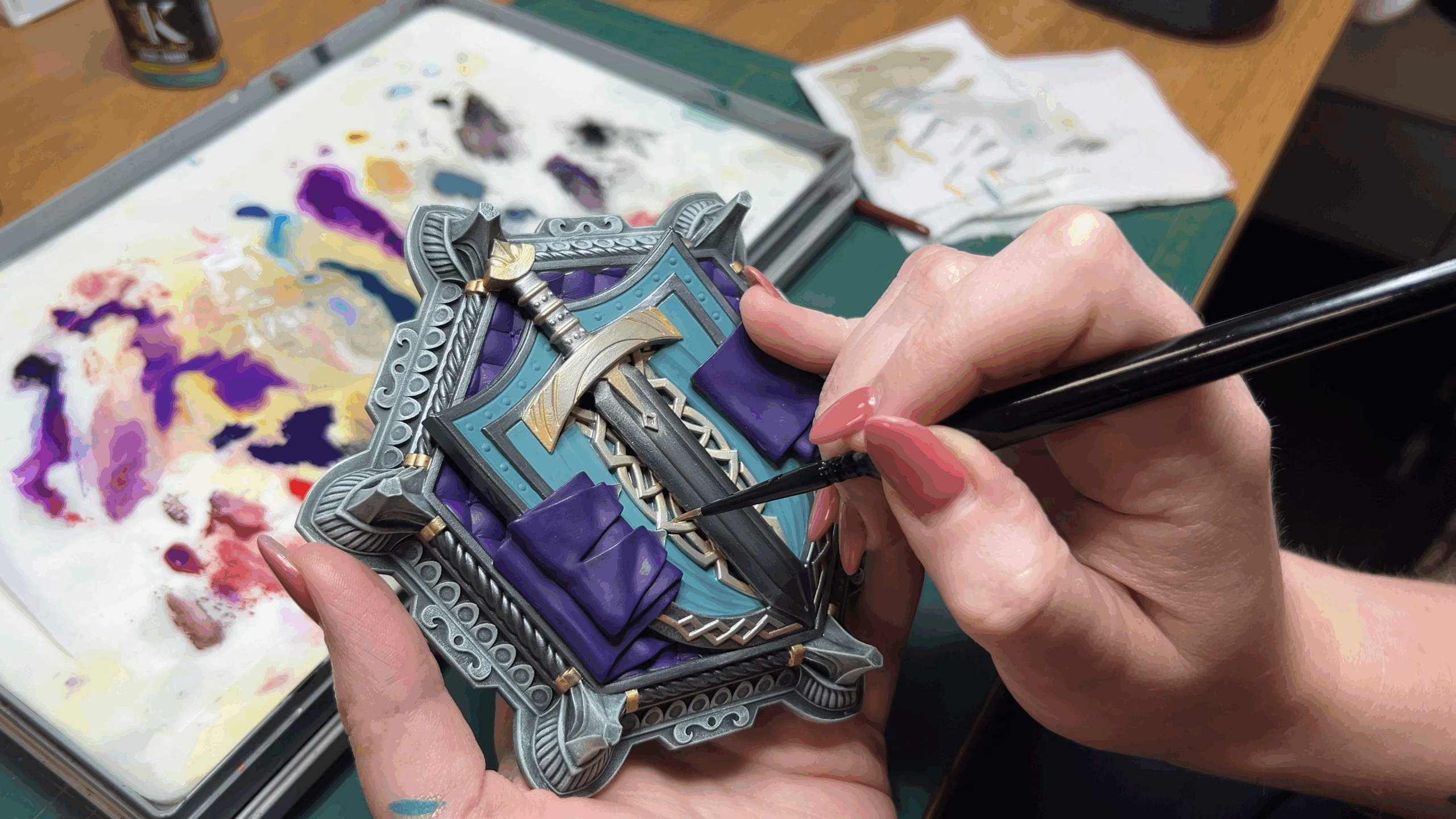
How To Choose The Best Desk Lamp for Miniature Painting (2026 Guide)
Let’s Shed Some Light on This Subject.
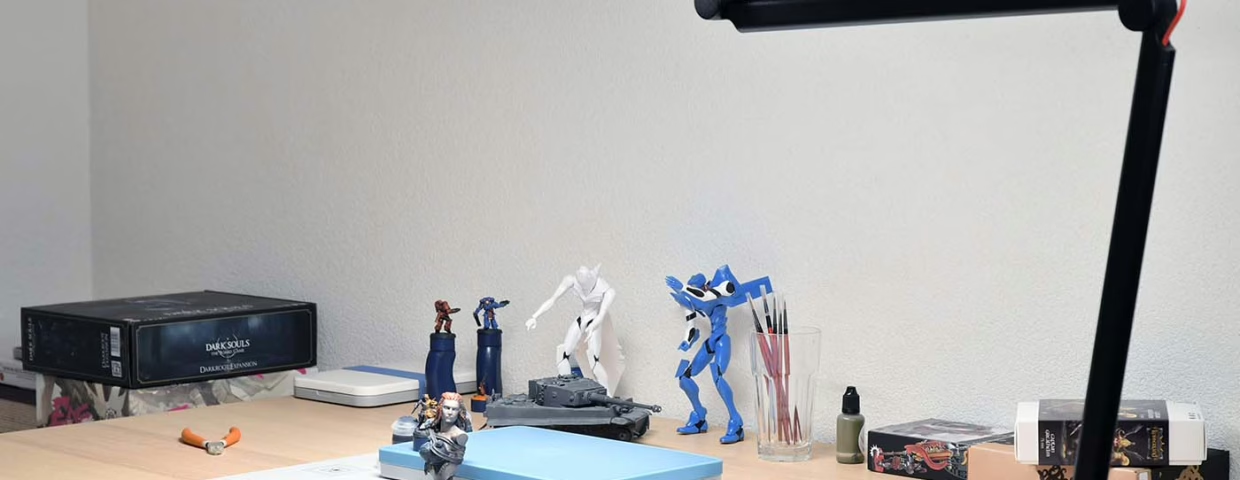
We’ve all been there. It’s Saturday night, the family is asleep, you’re trying to glaze a transition on your mini, and your eyes feel like they’ve been sandblasted. Your head is pounding, the shadows are swallowing your details, and you’re fairly certain that “flesh tone” you just mixed is actually a sickly orange. You wake up the next morning, look at the mini in the sunlight, and realize your lamp spent the whole night lying to you (never happened to me…just to a friend of mine…).
If you’re hunting for the best desk lamp for miniature painting in 2026, here’s the no-nonsense breakdown. You need a light with high CRI (look for 95+ to see those tricky reds), a 5000K daylight temperature so your colors don’t shift, and at least 1500 lumens to kill the shadows. It must be flicker-free to save you from migraines and have enough diffusion that you aren’t blinded by glare reflecting off wet paint.
I know this might sound technical, but I promise it won’t be like that.
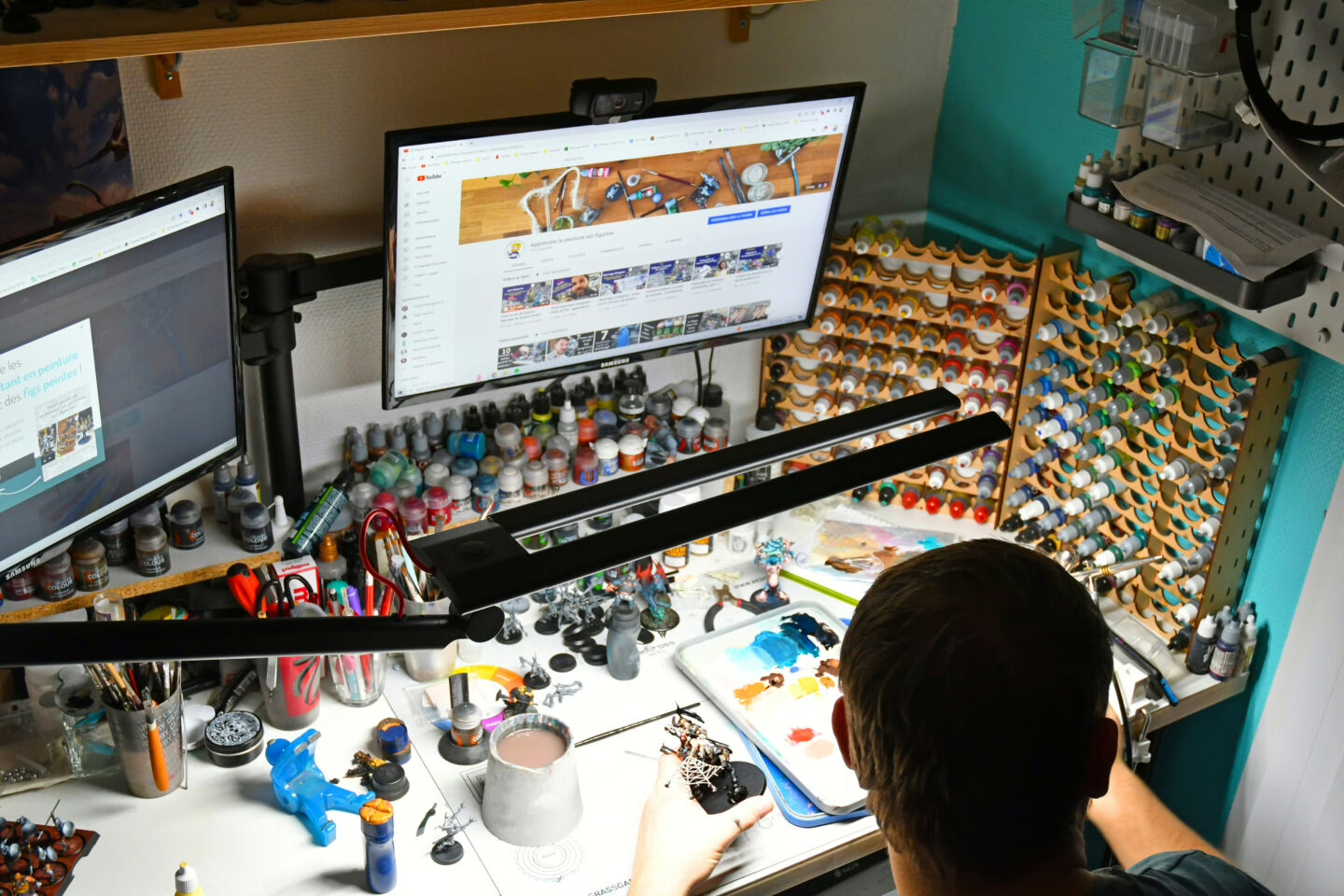
The Science of Light: What You Need to Know
Before buying a lamp, understand three things: Lumens, Kelvin, and CRI. Get these right, and you’re already ahead.
Lumens measure brightness. For miniature painting, aim for 1,000 to 3,000 lumens—enough to see fine details without squinting. Too little light forces your eyes to work overtime.
Kelvin (K) is the color of the light. Around 5000K is ideal—it mimics natural daylight. Lower numbers (like 3000K) look yellow and can distort your colors; very high numbers can feel harsh and blue.
CRI tells you how accurately a light shows color. Look for 95+ if possible. And here’s the key: CRI alone isn’t everything. The R9 value measures how well the light shows deep reds. If R9 is low, skin tones, leather, and warm shadows can look dull—even if the lamp claims “high CRI.”
Get these three right, and your lamp will finally stop lying to you.

What Most LED Lamps Get Wrong
Most hardware store LEDs are designed to help you find your keys, not paint a 32mm face. They usually brag about “Cool White” or “Daylight,” but they often have a strong blue light spike and very poor “R9” values.
Since most skin tones, leathers, and even shadows in our world rely on those red spectrums, a cheap lamp makes your work look dead. You might think you’re bad at mixing colors, but the truth is your hobby desk lamp just isn’t showing you the full picture. Your eyes are your most important tools. Treat them like it.
The Real Reason Expensive Lamps Feel Better
Ever finish a four-hour session feeling like you need to sit in a dark room for a week? That’s usually “micro-strain.” Cheap LEDs actually pulse—it’s a flicker so fast you can’t see it, but your brain is constantly trying to process it.
The best lighting for miniatures uses high-frequency drivers that are truly flicker-free. It also uses better diffusion. Instead of one harsh, tiny beam that creates “black hole” shadows under a cape, a good lamp spreads the light out. It’s like painting under a cloud on a sunny day. No glare, no squinting, no regret the next morning.
2026 Lamps Tier List: What To Actually Buy
Budget Hero: The “Double Tertial” Hack
Don’t buy one expensive lamp; buy two IKEA Tertials. Mount them on opposite sides of your desk and cross the beams. It’s the best way to kill hand shadows for under fifty bucks.
Spec Box: Double Tertial
- Best for: Beginners / Budget-conscious painters
- Lumens: 1000–1500 per bulb
- CRI Target: 90+ (Requires buying the right bulbs!)
- Color Temp: 5000K
- Shadow Control: Good (with two lamps)
- Eye Comfort: Moderate
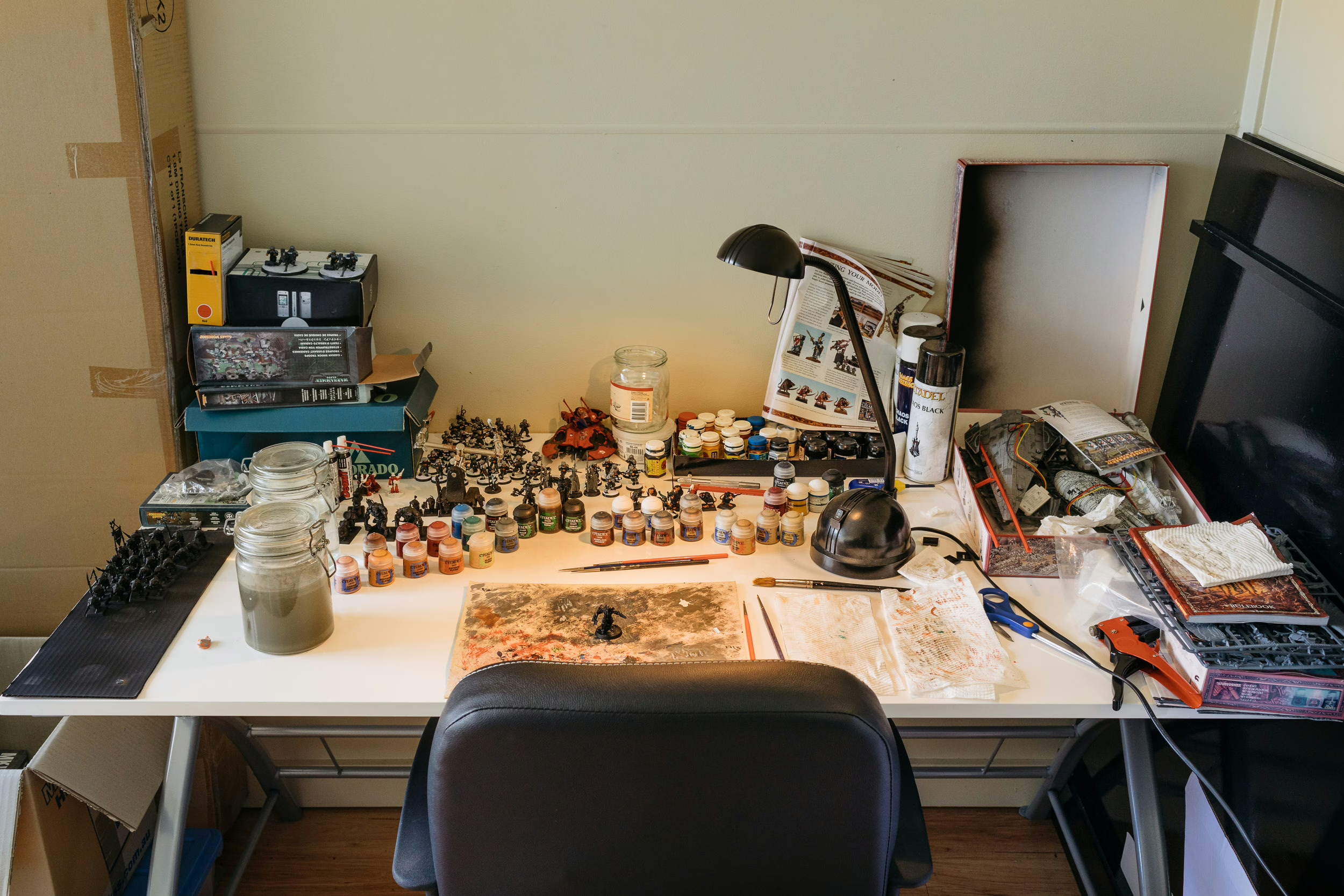
The Mid-Range Workhorse: Neatfi XL
The Neatfi XL is one of the favorites for a reason. It’s a 2500-lumen sun on an arm. It’s simple, wide, and covers the whole desk with one bar.
Spec Box: Neatfi XL
- Best for: Weekly hobbyists / Warhammer painting
- Lumens: 2200–2500
- CRI Target: 90+
- Color Temp: 5600K
- Shadow Control: Excellent
- Eye Comfort: High
The Premium Standard: Redgrass R9
Is it expensive? Yeah. Is it the best light quality I’ve ever tested? Also yeah. It hits 98+ CRI, meaning colors look almost like they do in natural daylight. If you’re doing 75mm display pieces and every micro-glaze matters, this is the machine you want.
Spec Box: Redgrass R9
- Best for: Display painters / Long-session pros
- Lumens: ~1800
- CRI: 98+ (Full 15-color scale)
- Color Temp: 5000K
- Shadow Control: Excellent
- Eye Comfort: Excellent (Flicker-free)
Hobby Lamps vs. Photography Softboxes
You’ll see some pros using those big photography softboxes. They’re amazing for diffusion—basically zero shadows. But for most of us, they’re a nightmare. They take up half the room, they’re not ergonomic, and you’ll constantly be bumping your head or your brush against them. Keep the softboxes for taking photos; stick to a dedicated miniature painting lamp for the actual work.
Light is Just the Beginning
Finding the best desk lamp ultimately boils down to your personal taste and budget. Whether you go with the clever IKEA setup or the high-tech RedGrass, the goal is simply to see your work clearly.
Remember, the absolute best lamp won’t make you a better painter—painting will. Now that you have the right gear, it is time to delve back into the world of miniature painting. If you need models to practice on, take a look at Loot’s free mini pack and try it out for yourself!
Get your lights set up, grab your brush, and let’s create something legendary.
Loot Studios can help you paint highly detailed minis, statues, terrains and props. Choose your favorite bundle from our previous releases or sign up for Fantasy or Sci-Fi to receive a new bundle every month. You can also check out some tips on our YouTube Channel.

Robert, also known as Rob, is an artist, English teacher, and lifelong RPG enthusiast. When he’s not sketching worlds or guiding learners through language, he’s diving into dice-rolling adventures and uncovering the magic that makes tabletop storytelling unforgettable. Fuelled by imagination and curiosity, Rob has spent years immersed in the RPG community, studying its stories, creatures, and creativity. He currently works in the marketing department at Loot Studios, where his passion for fantasy, minis, and the RPG universe fuels everything he does. Always with one foot in the real world and one in the realms of adventure, Rob celebrates art, language, and the joy of bringing ideas to life, whether at the table, in class, or behind the scenes.