RPG Miniatures Guide – From D&D to 3D Printing
Explore RPG miniatures and become an expert
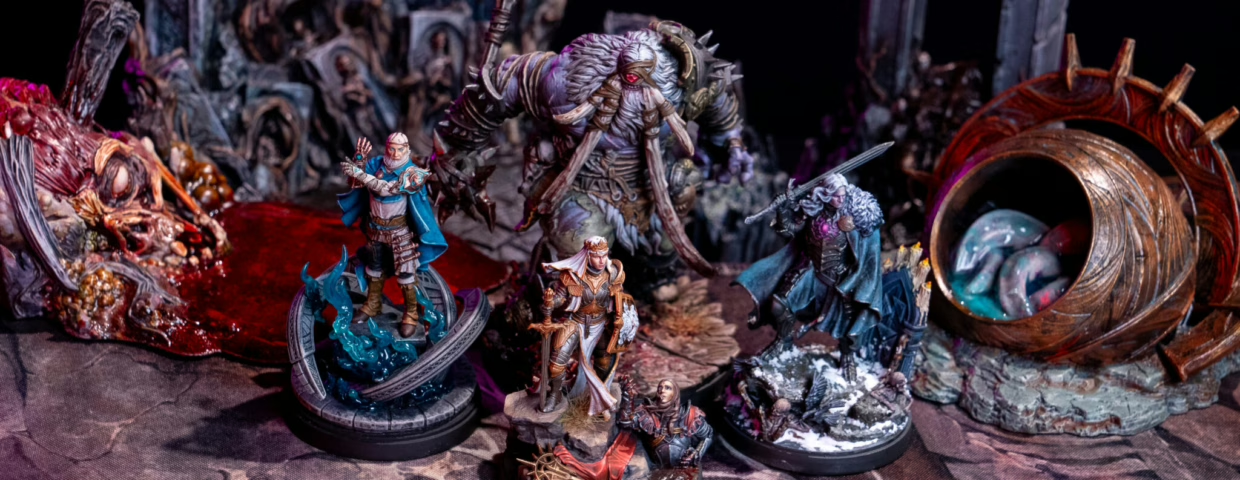
RPG miniatures have become one of the most important elements of modern tabletop role-playing. What started decades ago as a niche accessory, used mostly by hardcore wargamers, is now a central part of how many people experience RPGs, especially in fantasy and sci-fi settings. From a classic dungeon crawl to a neon-lit cyberpunk campaign, miniatures add clarity, immersion, and a tactile layer that transforms the game from something imagined into something you can literally see and touch on the table.
Today, the interest in RPG miniatures is stronger than ever. Players searching for their first set of minis, collectors expanding already impressive shelves, and 3D printing enthusiasts looking for the best STL files all meet at the same point: the desire to bring their stories to life. Are you ready to invest, or already step deep into this hobby?
What Are Miniatures?
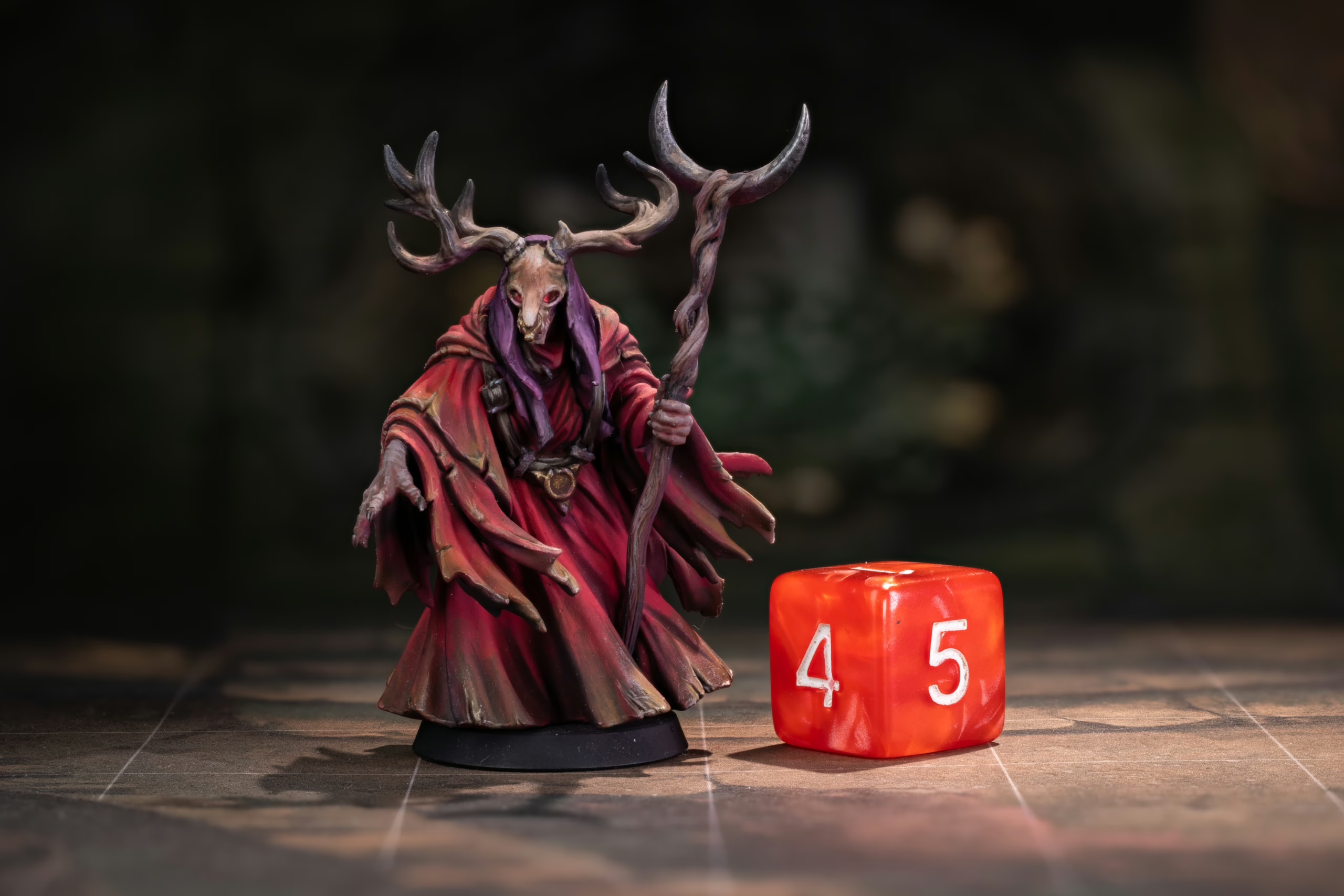
Technically, miniatures are small-scale figurines used to represent characters, creatures, vehicles, or scenery in tabletop games. In RPGs, they are most commonly associated with dnd miniatures, where they represent player characters, monsters, and NPCs during encounters. However, RPG miniatures go far beyond fantasy tropes. Sci-fi miniatures, cyberpunk miniatures, post-apocalyptic figures, and even historical-inspired minis are now widely used in campaigns that mix genres or explore new settings.
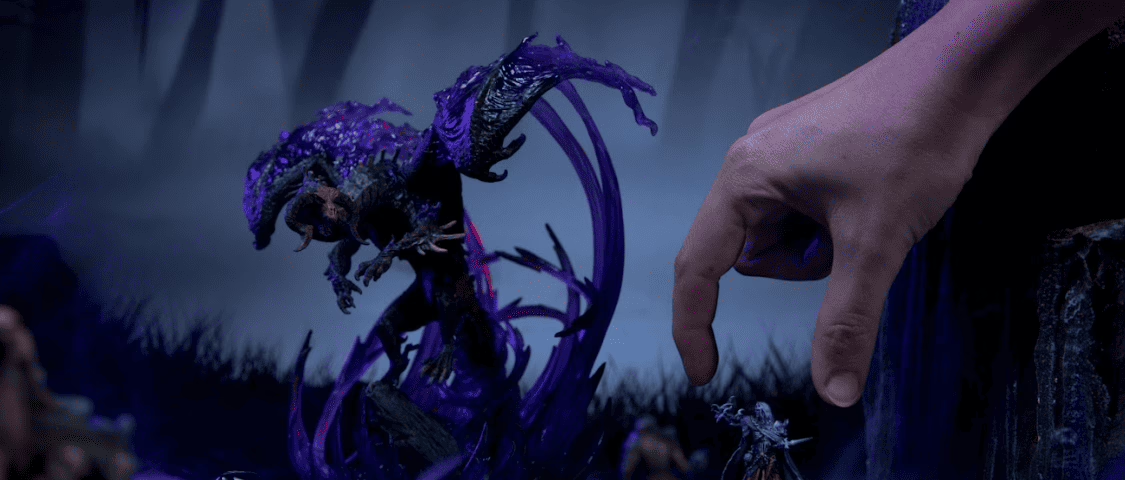
At their core, miniatures are visual anchors (and for me, they’re my precious). They help players understand positioning, distances, line of sight, and area-of-effect spells. They also serve as storytelling tools, reinforcing tone and atmosphere. A beautifully sculpted dragon miniature on the table immediately communicates danger and scale in a way that words alone often cannot.
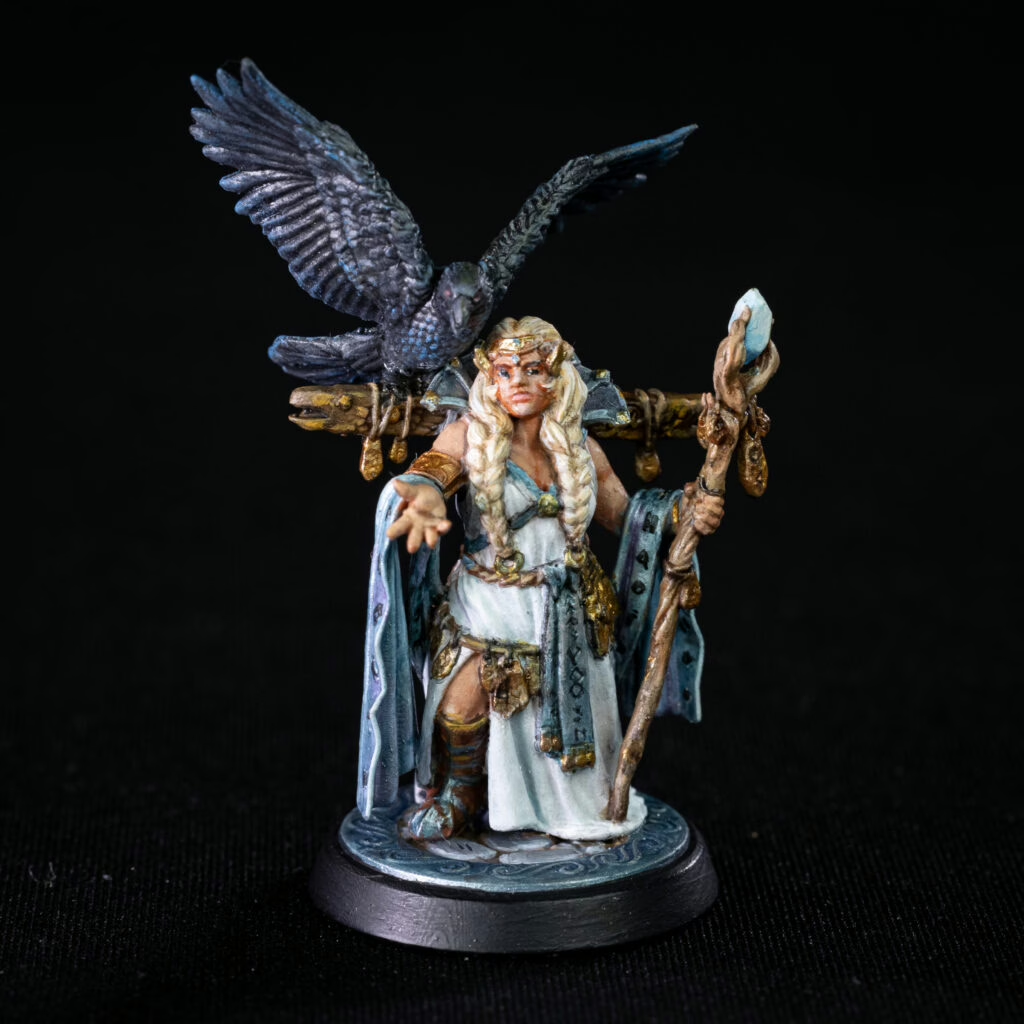
Over time, miniatures have evolved from simple, almost abstract figures into highly detailed works of (precious) art. Advances in sculpting software, resin casting, and especially 3D printing have raised the quality bar dramatically. Today, RPG miniatures can feature intricate armor details, expressive faces, dynamic poses, and complex textures that rival high-end collectibles.
What Are Miniatures Made Of?
The short answer is: plastic.
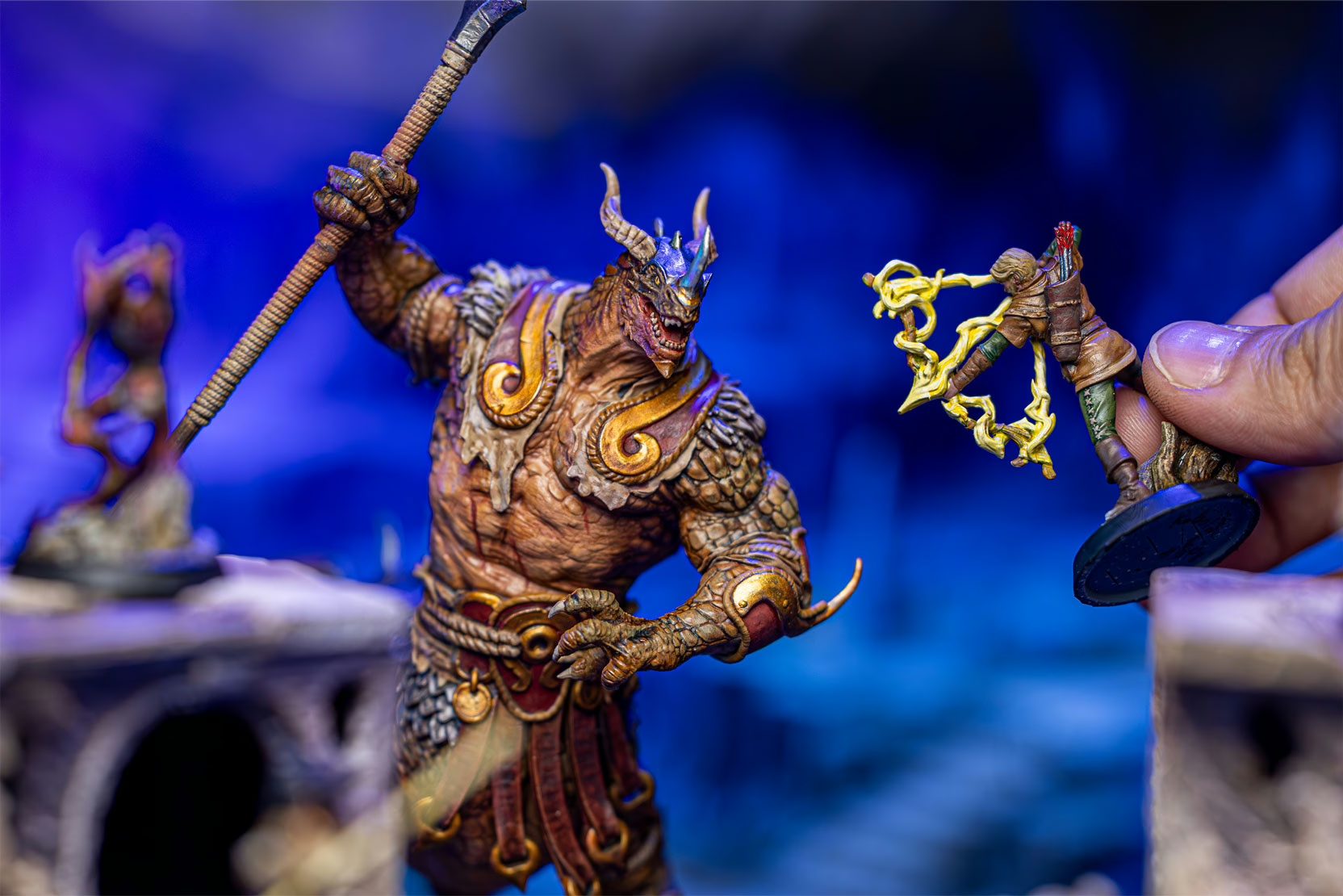
The long answer: depends. The material used to make RPG miniatures directly affects their price, durability, level of detail, and even how they feel in your hand. Before 3D printers were affordable and available to the main public, miniatures were made from metal alloys, usually pewter-based. Metal minis are durable and heavy, which some players still love, but they tend to be more expensive and less forgiving when dropped. If one of those falls on your toes, it’s as painful as stepping on Lego.
Now, plastic miniatures have become popular due to mass production. Injection-molded plastic allows companies to produce large quantities at lower costs, making pre-painted dnd miniatures widely accessible. But the details fall short compared to resin minis.
Yes, both of them are plastic in their core, however, the catch is how the miniatures are made. Resin miniatures are currently considered the gold standard for detail. Resin captures fine textures exceptionally well, making it ideal for fantasy miniatures with ornate armor or sci-fi miniatures filled with mechanical components. Because the resin starts liquid, and the printer solidifies bit by bit, it is what makes the fine details pop. And the rise of resin 3D printing has made high-quality resin minis accessible to everyone, not just manufacturers and big research laboratories.
With 3D printing, especially SLA and MSLA printers, hobbyists can produce resin miniatures at home with astonishing precision. This has fundamentally changed how people approach the hobby, shifting it from purely consumer-based to creator-driven.
Why Use Miniatures in RPG Campaigns?
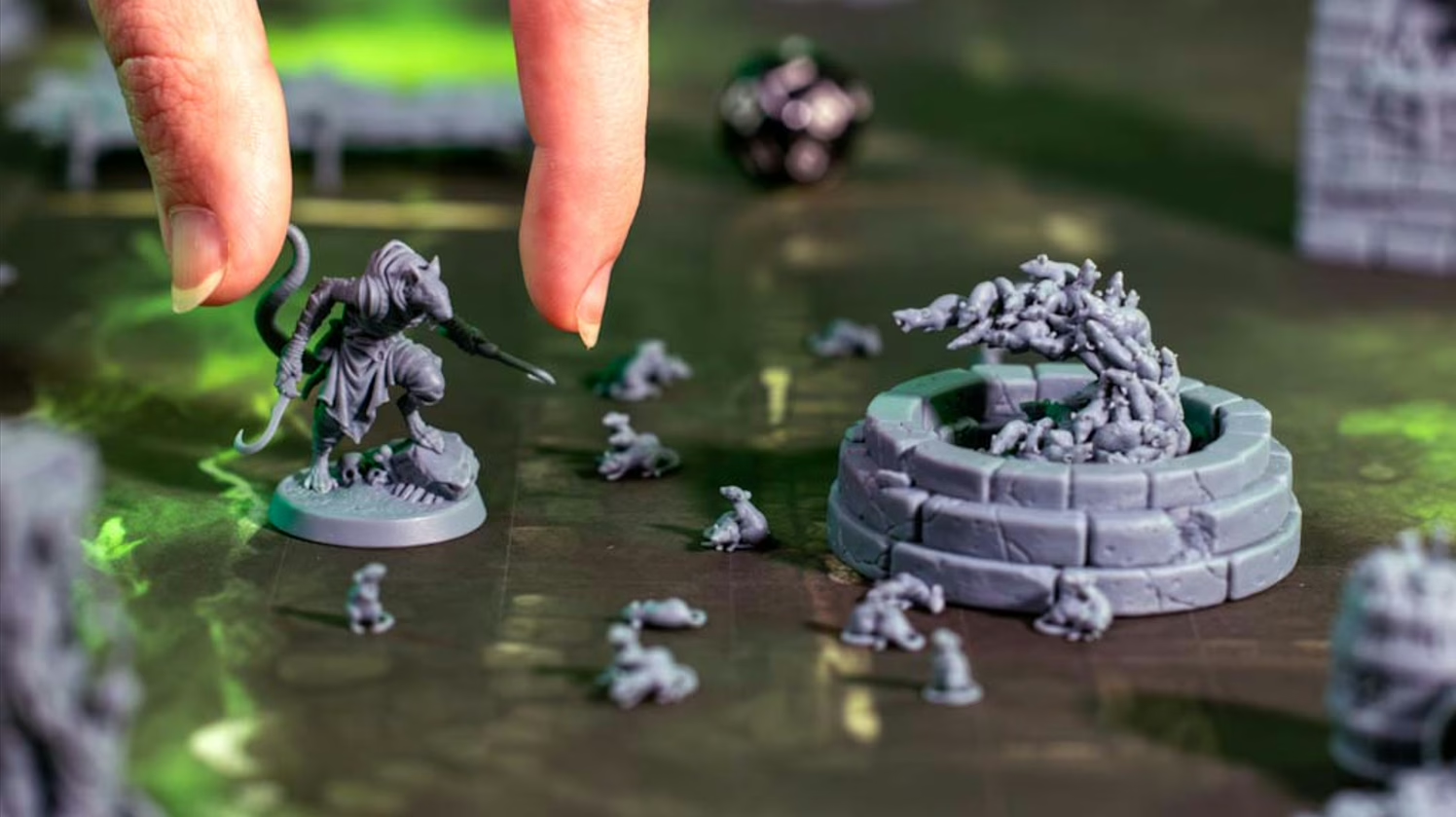
3D printers can help you play memorable RPG campaigns. Miniatures dramatically improve gameplay, especially in tactical systems. They remove ambiguity from combat and exploration by clearly showing where everything is. When a spell has a specific radius, miniatures make it easy to visualize who is affected. When movement speed matters, there is no debate about distances.
Beyond mechanics, RPG miniatures enhance immersion. Seeing your character represented as a physical object strengthens emotional investment. Many players feel more connected to their heroes when they can hold them, paint them, and watch them survive encounter after encounter. I know I am.
They also improve pacing. Combat, in general, tends to move faster when players can immediately see the battlefield instead of constantly asking for clarifications. For game masters, they provide a powerful storytelling tool, allowing dramatic reveals and cinematic moments that elevate the session.

What Do You Need to Use Them?
Using RPG miniatures does not require an elaborate setup. At a minimum, you need miniatures and some way to represent space, usually a grid mat or terrain. Dice, character sheets, and imagination still do most of the work, but minis add flavor.
For those diving deeper, accessories like modular terrain, tokens, and spell templates can further enhance gameplay. Painters may add brushes, paints, and primers, while 3D printing fans will need a resin printer, curing station, and safety equipment. The beauty of miniatures is that they scale with your interest. You can start simple and expand over time.
Do You Need Miniatures to Play RPGs?
Short answer: no. RPGs existed long before RPG miniatures became mainstream. Many groups still play purely in the theater of the mind, relying on description and imagination. That said, miniatures offer advantages that are hard to ignore, especially for visual learners and tactically minded players.
Miniatures are not a replacement for imagination but an extension of it. They ground abstract ideas in something tangible, making complex scenarios easier to manage. For many groups, once they start using RPG miniatures, it becomes difficult to go back.
Should You Buy or Print?
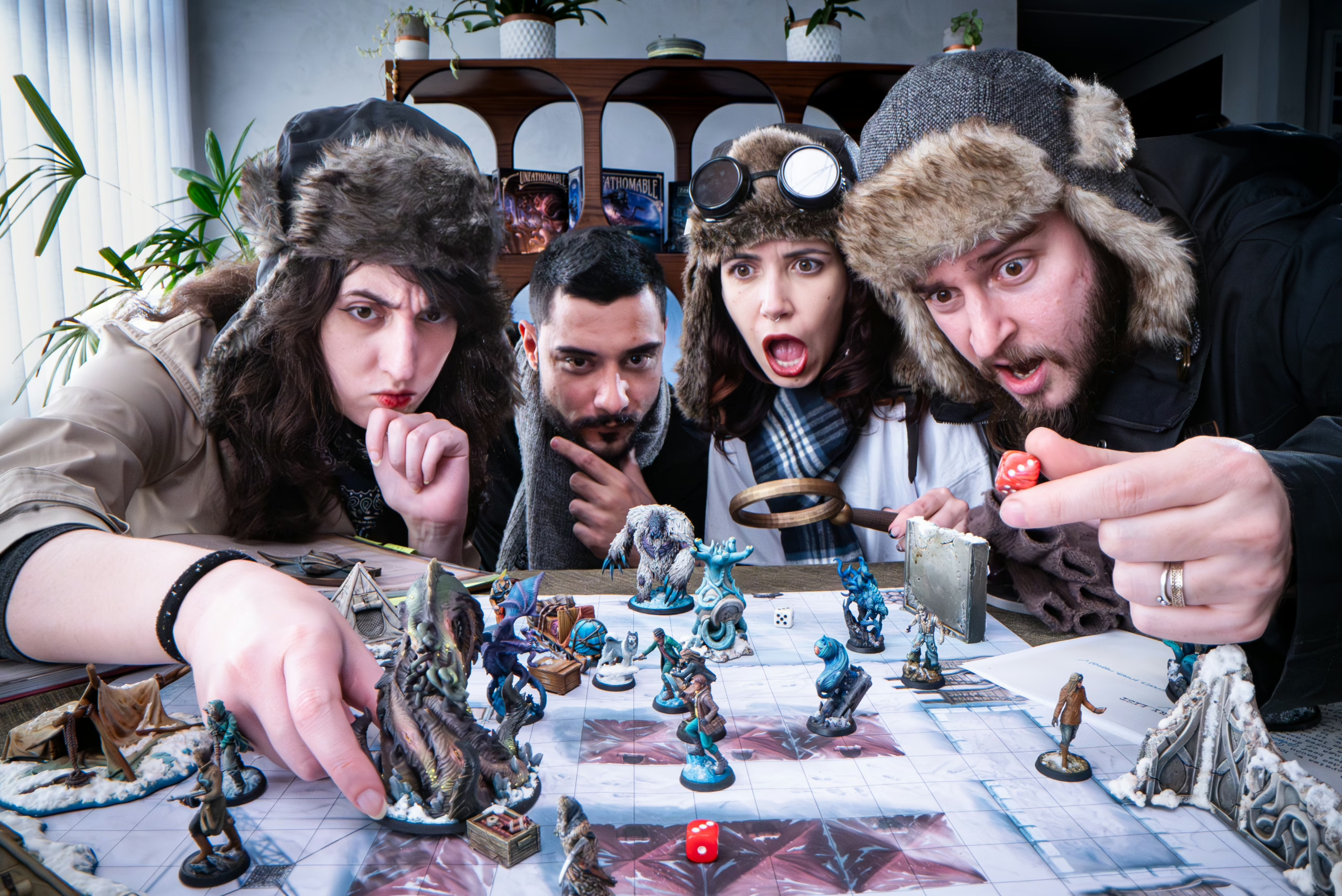
This is one of the most common questions among people entering this world. Buying miniatures is convenient. You choose a figure, pay, and it arrives ready to use, especially if it is pre-painted. This is ideal for players who want simplicity or do not have the time or interest to paint or print.
Printing your own miniatures, however, is often far more cost-effective in the long run. And it’s a good hobby to have. Once you own a resin printer, the cost per miniature drops dramatically.
Printing also offers customization. You can scale miniatures, mirror poses, combine parts, and create unique characters that perfectly match your vision. For collectors and game masters who need large numbers of monsters, 3D printing is a game changer.
Buying Miniatures to Paint or Pre-Painted
When buying RPG miniatures, you usually decide between unpainted and pre-painted figures. Pre-painted minis are convenient and immediately usable, making them popular for dnd miniatures in organized play or casual groups.
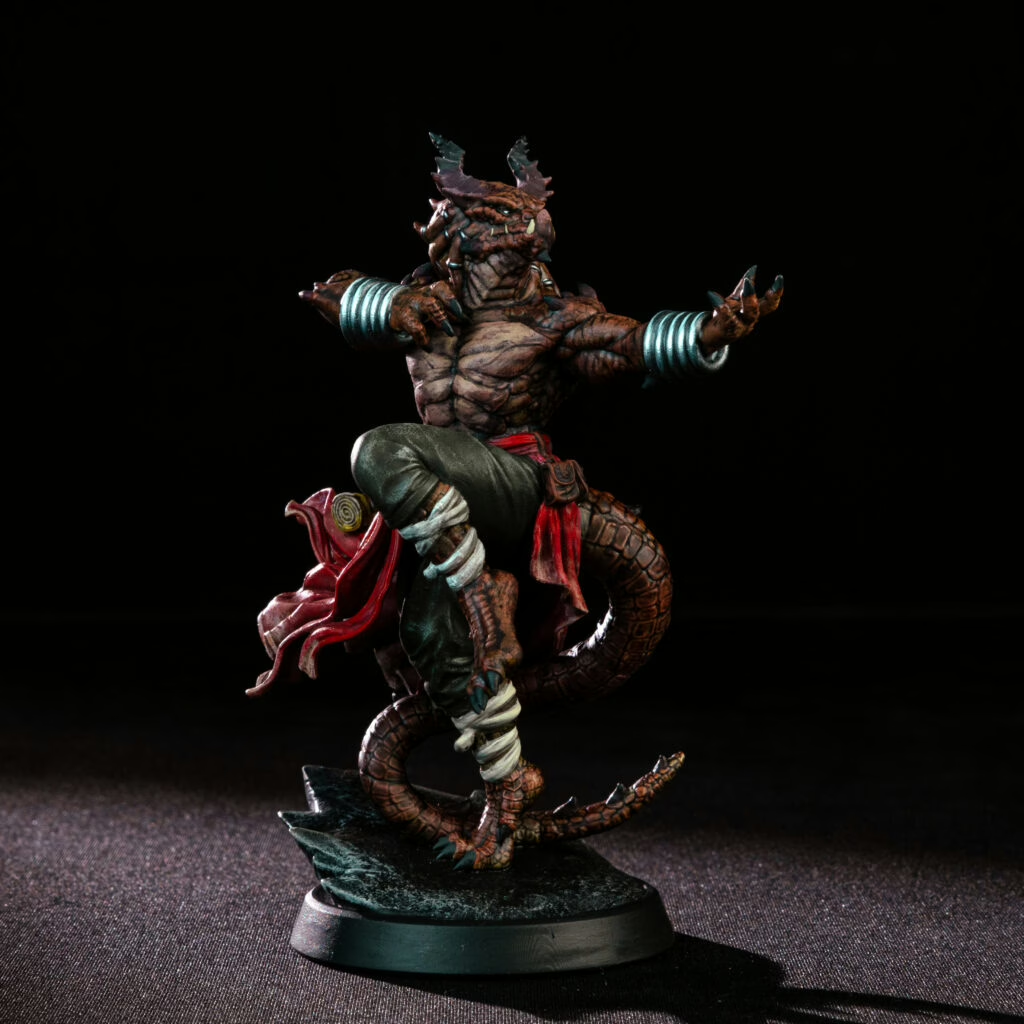
Unpainted miniatures, on the other hand, appeal to hobbyists who enjoy painting. Painting adds a personal touch and turns each miniature into a unique piece. Many players find painting relaxing and rewarding, while others see it as a way to deepen their connection with their characters.
3D Printed Minis: Print It Yourself
Printing your own RPG miniatures has become one of the most practical and flexible ways to build a collection. Platforms like MyMiniFactory make this possible by hosting high-quality STL files created specifically for tabletop gaming. Through MyMiniFactory, players can discover professional creators, explore different styles, and access models designed for reliable resin printing.
This digital-first approach delivers complete miniature ecosystems rather than isolated figures. Instead of purchasing individual models, players can join Loot Studios’ subscription plans and receive monthly themed releases that include characters, monsters, terrain, and narrative-driven assets. Each set is designed to work together, making it easier to support entire encounters or campaign arcs with a consistent visual style.
And of course, we would never let you down. We provide pre-supported STL files optimized for resin printing, which reduces failed prints and lowers the technical barrier for beginners. Once downloaded, these files can be printed multiple times, scaled as needed, and reused across different campaigns, making them far more cost-effective than buying physical miniatures one by one.
By combining digital distribution, reliable print-ready files, and a subscription-based release model, we want to give players a scalable and affordable way to grow their RPG miniatures collection while maintaining creative control over what appears on the table.
Scales: What Are the Ideal Miniature Sizes?
Understanding scale is essential when working with RPG miniatures. The most common comparison is 32 mm vs. 75 mm miniature scales for D&D. While 32 mm is ideal for gameplay, 75 mm miniatures are usually display pieces focused on visual impact or painting rather than table usability.
What Scale Are D&D Miniatures?
Most dnd miniatures follow the 28 mm to 32 mm heroic scale. This style exaggerates proportions slightly to make details easier to see during gameplay and painting.
What Are the Applications of Miniatures?
Beyond combat, RPG miniatures are used for exploration, storytelling, and world-building. Terrain, vehicles, and props expand their usefulness, while collectors focus on display and painters treat miniatures as artistic projects.
For immersive gameplay, many consider resin minis the best miniatures for immersive campaigns, especially when combined with terrain and atmospheric lighting, for all the details a resin mini can provide.
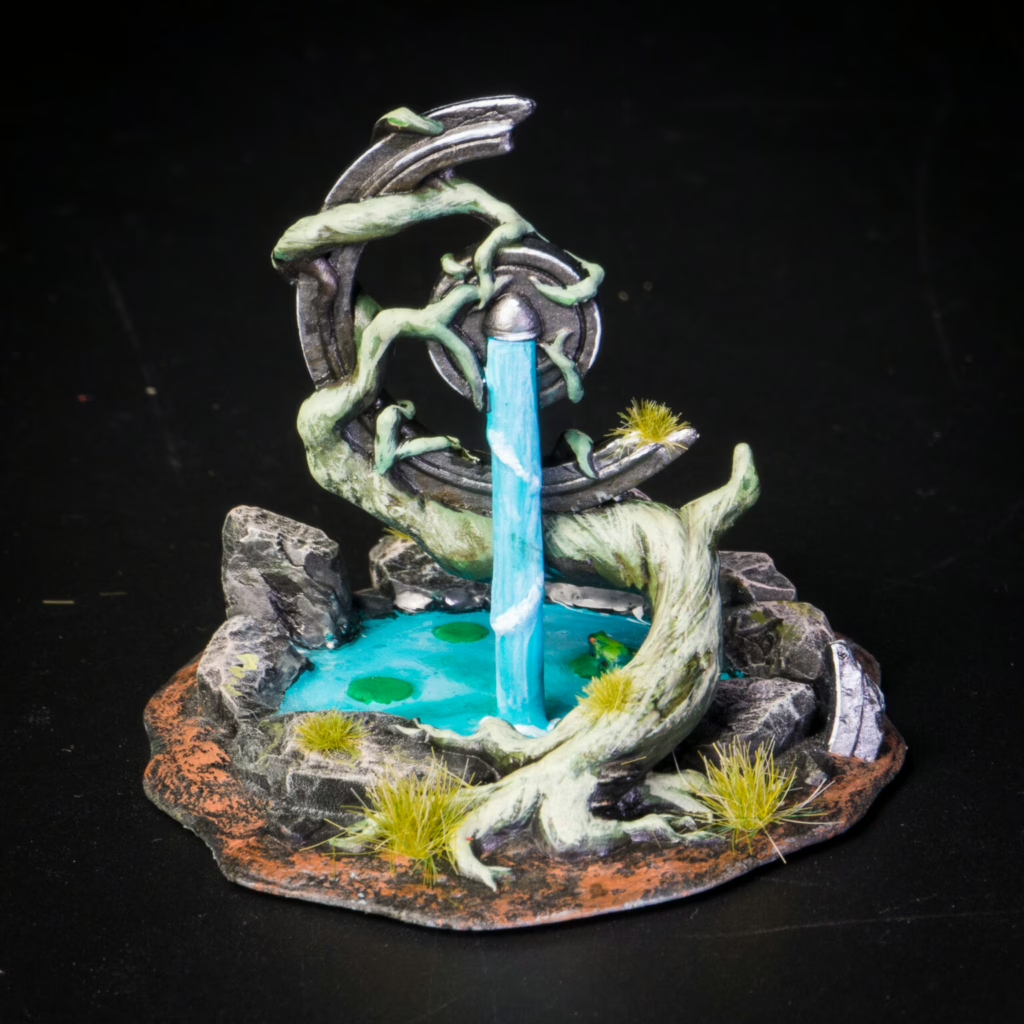
The Future of RPG Miniatures
Well, so where is this all going?
The future of RPG miniatures is increasingly digital-first, creator-driven, and shaped by how players want to experience tabletop games in a flexible, cost-efficient way. As RPGs evolve, so do expectations around customization, visual quality, and accessibility, most of all. Miniatures are no longer seen as optional accessories, but as core tools that enhance immersion, gameplay clarity, and long-term campaign engagement.
The Move Away From Isolated Purchases
One of the clearest shifts defining the future of RPG miniatures is the move away from isolated purchases toward curated content ecosystems. Instead of buying individual figures one at a time, players are now looking for complete, themed releases that support entire adventures. This is where subscription-based models stand out. A monthly subscription delivers consistent value, predictable costs, and cohesive miniature lines designed to work together on the table. For players and game masters, this approach reduces friction and ensures they always have the right minis when a new story arc begins.
The good thing is that we are already thinking about the future. Loot Studios’ subscription model directly responds to this new behavior. Each release provides a large set of high-quality fantasy miniatures and sci-fi miniatures, along with terrain and narrative-driven designs. Instead of hunting for compatible figures across multiple stores, subscribers receive ready-to-use collections that feel like parts of a living world. This model aligns perfectly with how modern RPG campaigns are planned and played.
Personalization at Scale
Another defining trend in the future of RPG miniatures is personalization at scale. Players want miniatures that accurately reflect their characters, not generic stand-ins. 3D printing enables this shift by turning digital files into adaptable assets. Through scaling, mirroring, and selective printing, players can customize RPG miniatures to match their vision without paying premium prices for custom sculpts. Subscriptions amplify this advantage by offering a continuous flow of new designs, ensuring long-term variety and creative freedom.
Print reliability and ease of use are becoming just as important as sculpt quality. As more players enter the hobby, demand for miniatures with pre-supported STL files continues to grow. Pre-supported files reduce failed prints, save time, and make resin printing accessible even to beginners. Loot Studios’ focus on production-ready STL files that directly supports this trend, lowering technical barriers and allowing subscribers to focus on painting, storytelling, and gameplay rather than troubleshooting prints.
Digital Ownership
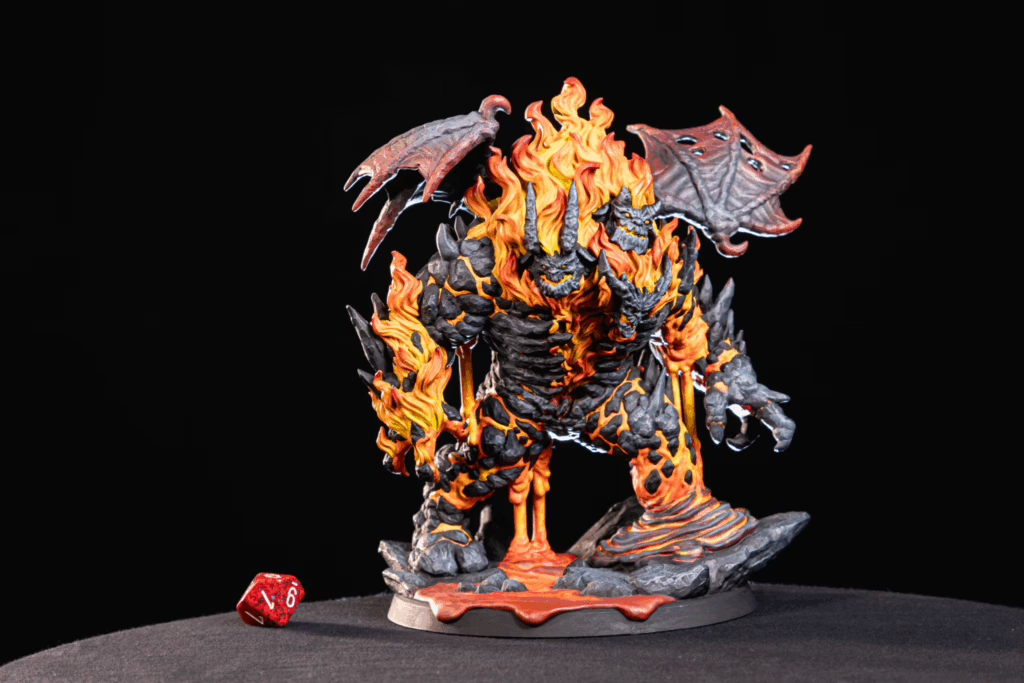
Now, from a cost perspective, the future strongly favors digital ownership. When spread across dozens of miniatures per month, the cost per figure drops dramatically compared to traditional retail purchases. This makes high-quality RPG miniatures attainable for new players, while offering exceptional value to collectors and experienced game masters managing large campaigns.
Gameplay and Display
Another factor shaping the future is the convergence of gameplay and display. Modern dnd miniatures are no longer designed only for grid-based combat. Dynamic poses, cinematic compositions, and high-detail sculpts allow the same miniature to function both on the table and on a display shelf. Loot Studios embraces this hybrid approach by producing miniatures that balance readability at 32 mm scale with visual impact suitable for collectors and painters. This dual-purpose design philosophy reflects how players engage with miniatures beyond game night.
Community-driven creation will continue to influence what RPG miniatures look like in the years ahead. Feedback from subscribers, social engagement, and creator communities help shape future releases, themes, and stylistic directions. Subscription models foster this dialogue by establishing an ongoing relationship between studio and audience, rather than a one-time transaction. This feedback loop leads to more relevant releases and stronger alignment with how RPGs are actually played.
Sustainability
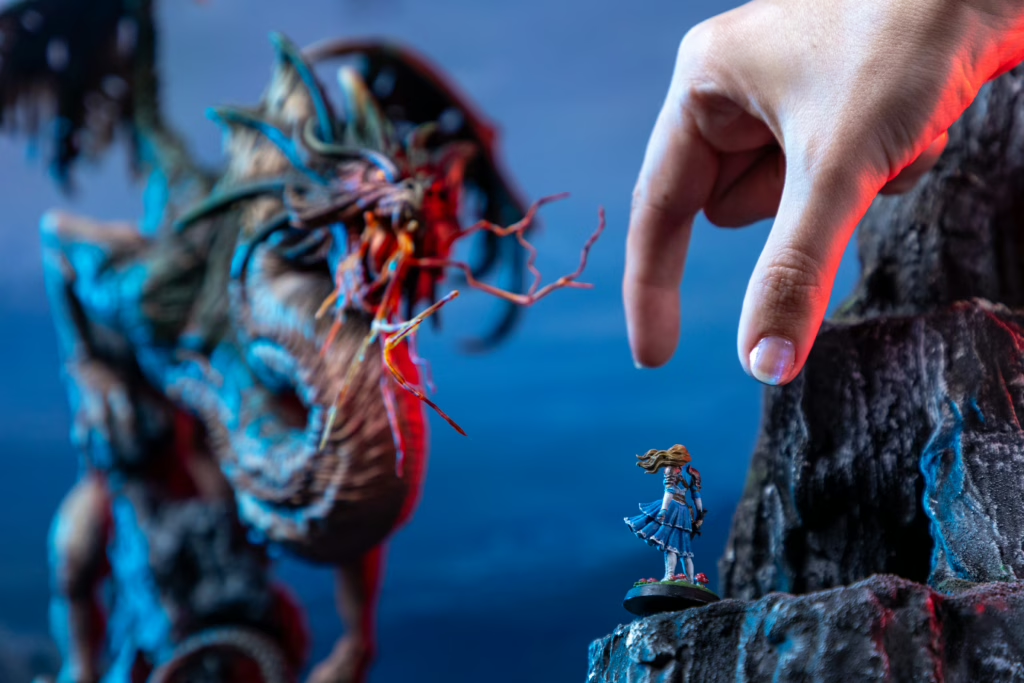
Sustainability and efficiency are also becoming part of the conversation. Digital distribution eliminates excess packaging and shipping, while printing on demand reduces overproduction. Subscriptions encourage intentional printing, where players produce only the miniatures they need for their campaigns. This approach fits naturally into the future of RPG miniatures, where smart consumption and long-term value matter as much as visual quality.
Looking ahead, the future of RPG miniatures is not defined by a single format or genre. It is defined by flexibility.
Players want access to worlds, not just figures. They want collections that grow with their campaigns, adapt to different systems, and support both fantasy miniatures and futuristic settings. And at Loot Studios, we are working every day to embody this future in our subscriptions by combining consistent content, high production standards, and creative freedom into a single, scalable solution.
For players, collectors, and 3D printing enthusiasts alike, this future means greater control, better value, and deeper immersion. RPG miniatures are becoming part of an integrated storytelling workflow, and subscriptions are emerging as the most efficient way to support that journey. As technology and creativity continue to advance, the role of miniatures will only become more central to unforgettable tabletop experiences.
Final Thoughts
RPG miniatures are no longer just visual aids for tabletop games. They have become essential tools for immersion, clarity, and storytelling, helping players and game masters turn abstract ideas into shared, memorable experiences. From improving combat mechanics to reinforcing the tone of a campaign, miniatures play a direct role in how RPGs are played and remembered.
For new players, RPG miniatures make gameplay easier to understand and more engaging. For experienced groups, they offer creative freedom and precision, allowing worlds, encounters, and characters to feel intentional and cohesive. Collectors and hobbyists benefit as well, especially with digital libraries of fantasy miniatures, sci-fi miniatures, and cyberpunk miniatures that can be printed on demand.
With 3D printing becoming more accessible, printing your own RPG miniatures is now a practical and cost-effective option, especially when using miniatures with pre-supported STL files. And subscription models further enhance this experience by providing consistent, themed releases that support long-term campaigns and evolving stories. Plus, it saves you some cash.
RPG miniatures are an investment in better gameplay and deeper immersion. Whether you choose to buy, print, or subscribe, the right miniatures help transform every session into something more visual, tactical, and unforgettable.
Loot Studios can help you tell your story through highly detailed minis, statues, terrains, busts, and props. Sign up for Loot and choose your favorite bundles from our library of more than 130 options. You can also learn more about our printing and painting process by checking our YouTube Channel.

Luiza Romagnoli is an autistic Brazilian woman, journalist, and obsessed with RPG. She has been writing since she can remember, but it was in 2017, posting texts on Instagram, that she began to take it seriously. She has a poetry book published by Patuá Publishing House: sirva o chá. Nowadays, Luiza is a multi-hyphenned professional: she’s a writer, translator, English and Spanish Teacher, and has an RPG stationery store: Papelaria do Aurel. Although having all these jobs almost leave no room for her D&D sessions, she still loves them.