3D Printable Terrain: Everything You Need For Tabletop Gaming
It’s All About the Environment!
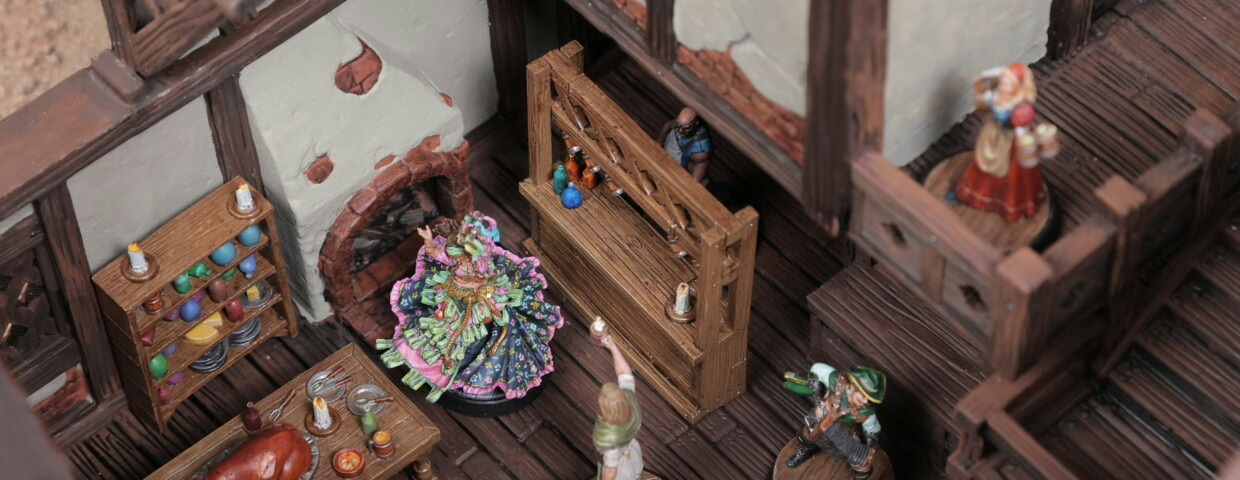
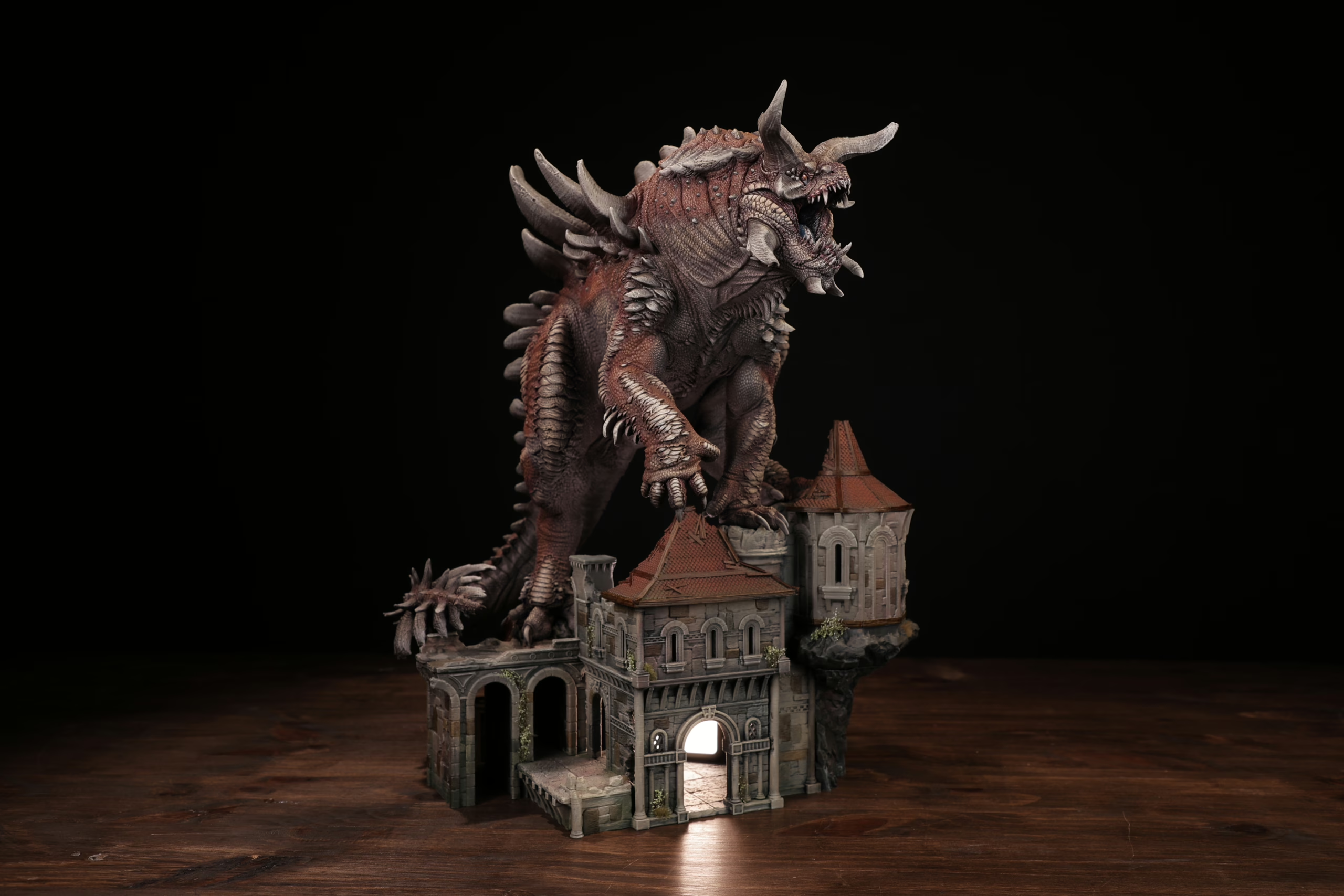
If you’ve spent any time around tabletop RPGs or wargames, you already know that miniatures alone don’t tell the whole story. A dragon is impressive, but place it on an empty table, and the magic fades quickly. That’s where 3D printable terrain comes in. Printable terrain turns a flat surface into a living world, full of ruins, medieval houses, forests, corridors, and alien landscapes that instantly elevate immersion. Over the last few years, printable scenery has become one of the most searched topics among hobbyists, combining creativity, storytelling, and the practical appeal of owning a personal terrain collection at home.
And now, we’ve designed a guide to sit right between inspiration and practicality. If you’re curious about what terrain is, why it matters so much, how to scale it correctly, and which pieces are worth printing first, you’re in the right place. Along the way, we’ll also touch on common questions about printing and painting, with links to in-depth guides for those ready to go further.
What are terrains?
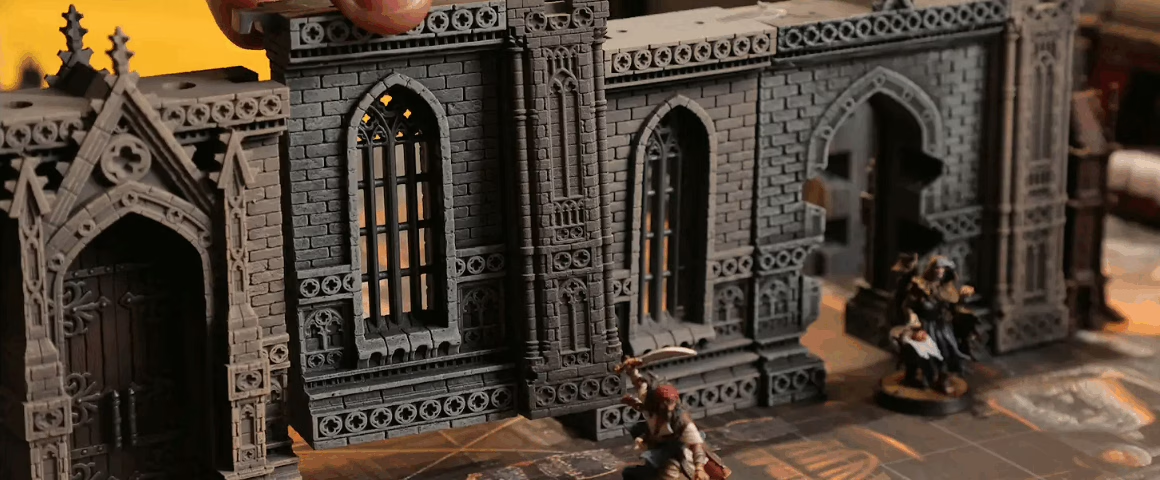
So, in tabletop terms, terrains are the physical elements that represent the environment where the game takes place, and usually come with a grid, so you can place your minis correctly in a combat. Walls, floors, cliffs, medieval houses, sci-fi corridors, temples, ruins, rocks, and scatter scenery like crates or barrels all fall under the umbrella of printable terrain. When people talk about 3D printable terrain, they’re typically referring to Terrain STLs or Terrain STL files that can be printed at home and arranged on a gaming table to build custom scenarios.
Printable scenery gives players control. Instead of relying on flat maps or generic store-bought pieces, you can print exactly what your campaign needs. One week it’s a medieval village under siege, the next it’s a forgotten dungeon or a war-torn sci-fi outpost. With fantasy 3D printable terrain STL files and sci-fi 3D printable terrain STL files widely available, the same printer can serve multiple systems and genres without locking you into a single aesthetic.
At Loot Studios, we tend to approach terrain the same way we approach miniatures: as storytelling tools first, objects second. The focus is not only on how a piece looks on its own, but on how it connects, stacks, and interacts with the rest of the table.
How important are terrains for a session?
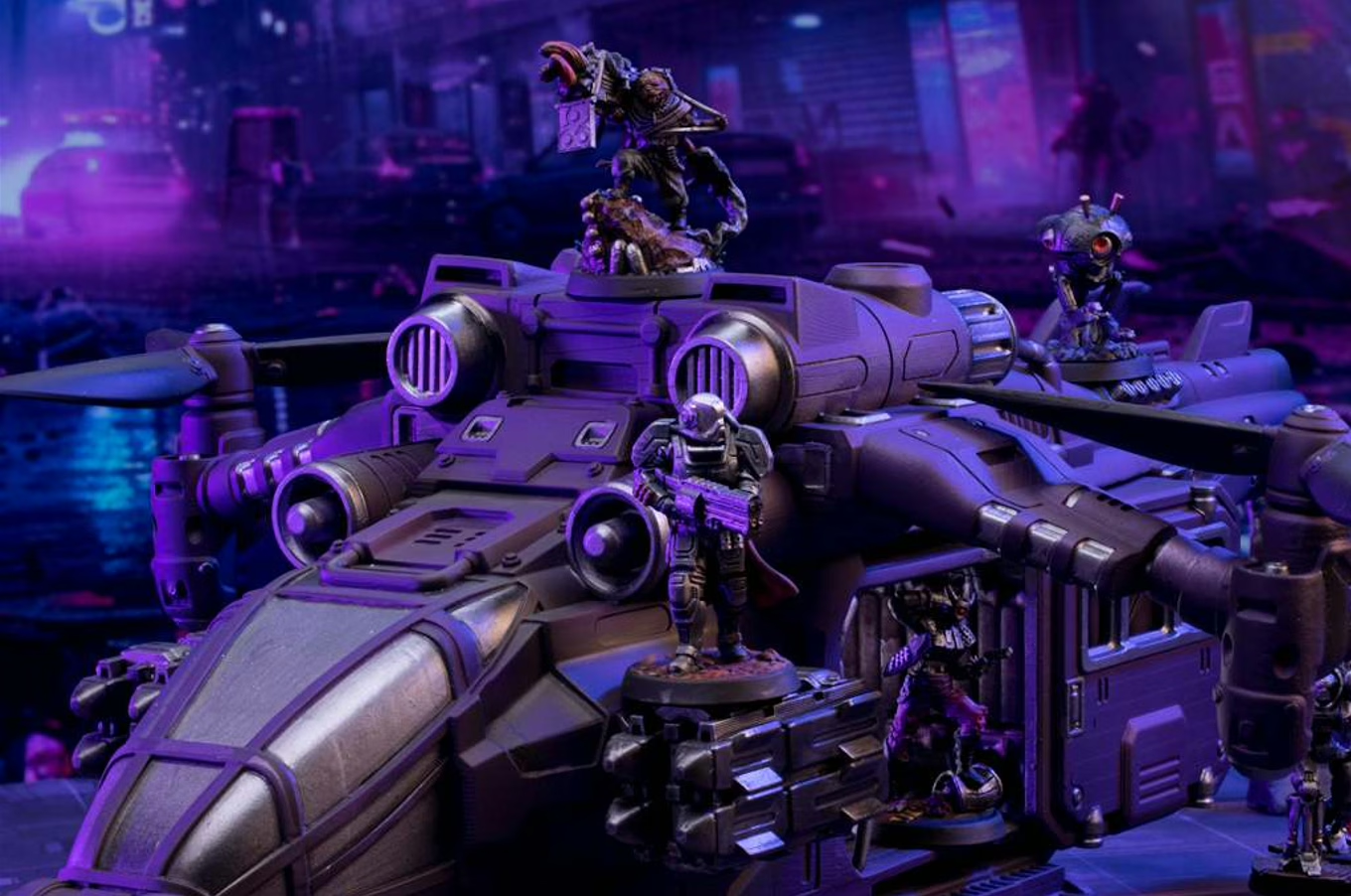
Terrain is often underestimated, especially by beginners. It’s common to think of it as decoration, something “nice to have” once you already own enough miniatures. In practice, terrain is one of the most impactful elements of a session. It defines movement, line of sight, tactical choices, and even pacing. A narrow alley between medieval houses creates tension. A wide-open battlefield invites long-range combat. Vertical scenery changes how players think, forcing them to consider elevation, cover, and risk. It’s all tactics, babe.
For RPGs, printable scenery does more than help with combat. It also supports roleplay. Players react differently when they can physically point to a tavern, a tower, or a crumbling bridge. For DMs, terrain reduces cognitive load. Instead of constantly describing distances and obstacles, the table itself communicates those details.

In wargames, the impact is even more mechanical. Printable scenery for tabletop wargames is essential for balance. Without enough terrain, certain armies dominate. With well-placed cover, ruins, and obstacles, every faction gets space to shine.
Terrain also contributes to memory. Players might forget exact dice rolls, but they’ll remember the session where the fight happened inside a burning village or across a shattered cathedral. Good terrain turns a game into a shared visual experience, and that’s where it really proves its value.
And to have an even more immersive game, you’ll want to paint all your scenarios. Otherwise, it’ll all be… gray and dull. Fear not, we’ve got you covered! Painting walls and stones scattered in a forest can sometimes be challenging; that’s why we have a full guide on Painting Rock Terrains, so you have a starter. We also encourage you to check our Guide to Painting Miniature Terrains for all the other elements that you might need in your game. Happy painting!
WANNA KNOW HOW TO PAINT LIKE US? CHECK HERE!
How to scale the terrains
Now, scaling is one of the most common concerns for anyone new to 3D printable terrain for tabletop gaming. The good news is that it’s simpler than it sounds. Most tabletop systems fall into a few standard scales, with 28–32 mm being the most common for RPGs and many wargames. Terrain STLs are usually designed with these scales in mind, but adjustments are sometimes necessary depending on your miniatures and personal taste.
The first thing to consider is doors and stairs. These are the quickest indicators of scale. If a miniature looks like it can comfortably walk through a doorway or climb a staircase, you’re on the right track. For medieval houses, which are among the highest-volume searched terrain pieces, slightly exaggerated proportions often work better. Taller walls and wider doors improve readability on the table and make painting details stand out.
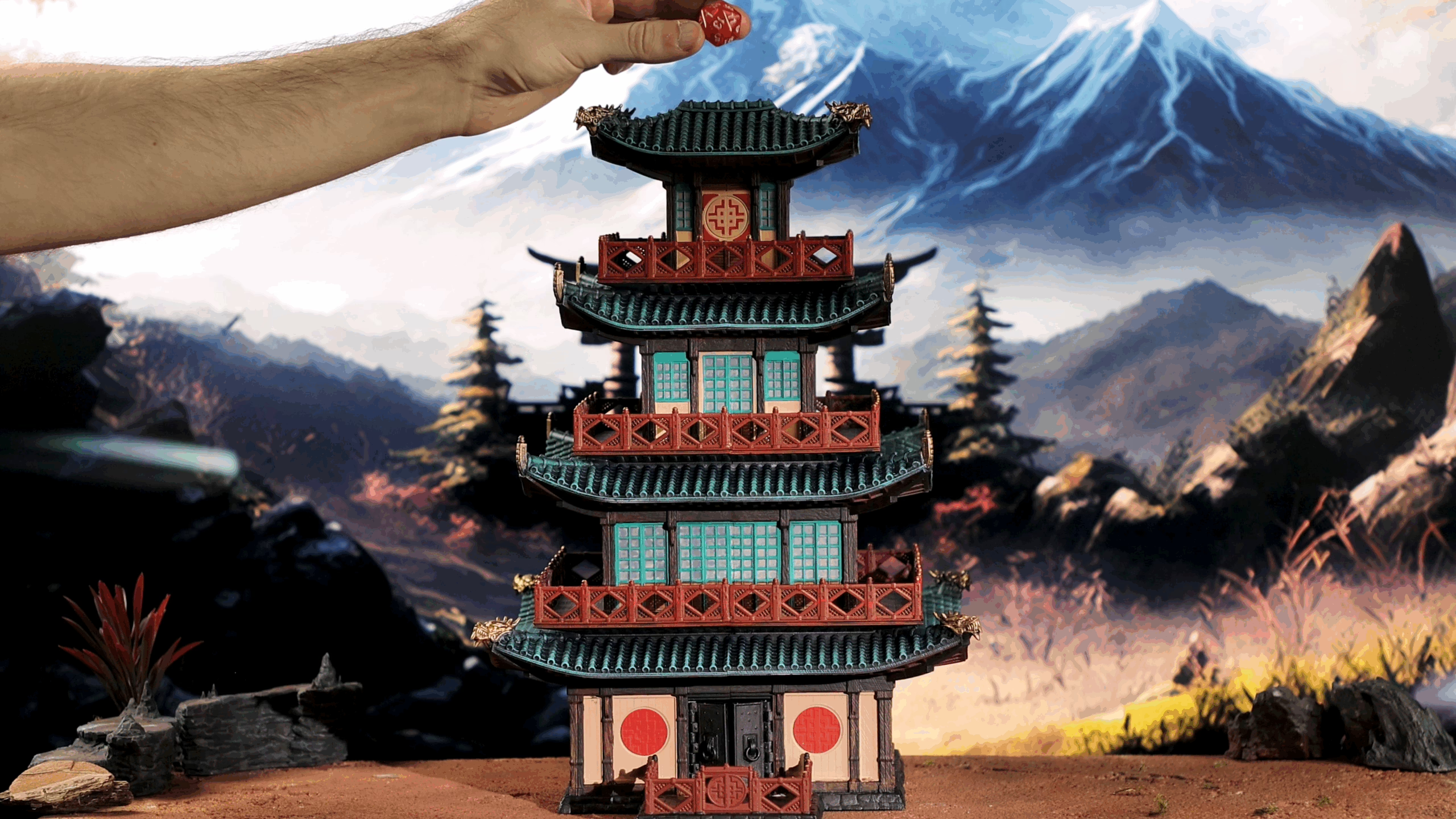
Another key factor is modularity. A modular 3D printable terrain system allows you to scale once and reuse that setting across dozens of pieces. Floors, walls, roofs, and connectors printed at the same scale will always fit together, saving time and filament in the long run.
Printing settings also play a role in perceived scale. Layer height, nozzle size, and print orientation can affect how sharp or chunky details appear. Beginners often benefit from starting with pieces like rocks, ruins, and walls before moving on to complex structures.
The Best terrains from Loot
When it comes to choosing what to print first, variety and usability matter more than sheer complexity. At Loot Studios, we tend to design terrain with gameplay in mind, which means pieces that see constant use across different campaigns and systems.
If you’re looking for a classic medieval village, the Chaos in Haydale Bundle is exactly what you want! They instantly establish setting and scale, with well-designed houses with removable roofs and accessible interiors, adding both tactical depth and narrative flexibility. The little pieces that complement the space, like the wheelbarrow, are particularly cute.
Dungeon tiles and walls are another essential. A modular dungeon setup allows for endless layouts using the same core pieces. Bundles like Blood Moon, Dawnkeep Assault, and Arthurian Tales, have some of the best scenarios to build up your dungeon, or simply mix and match stories and environments.
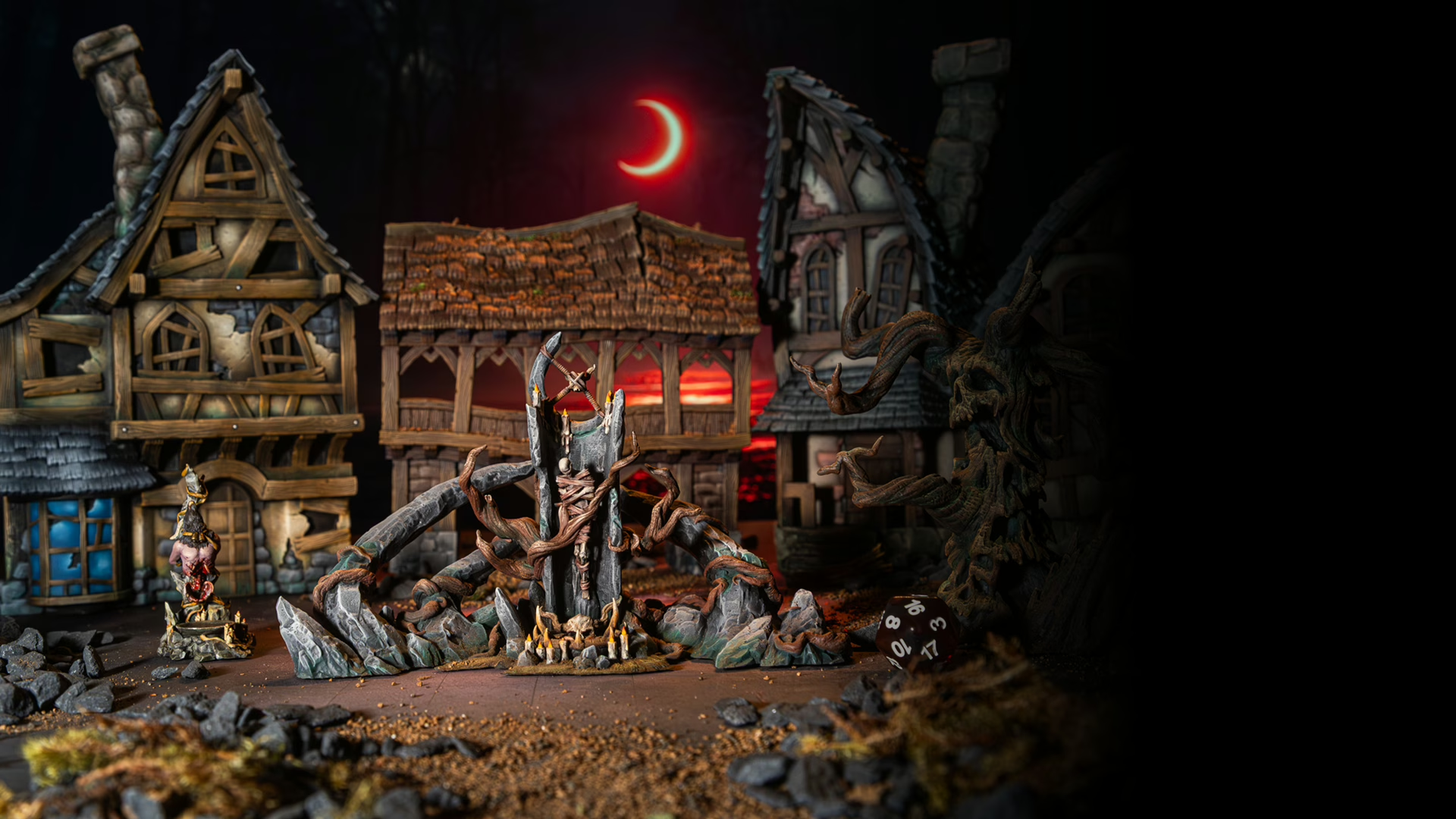
Natural scenery like rocks, cliffs, and caves deserves special mention. These pieces are easy to print, easy to paint, and universally useful. They work just as well in sci-fi settings as they do in fantasy, like our Shadow of Vengeance Bundle.
For sci-fi fans, industrial corridors, doors, and scattered elements bring a modular look to the table. Sci-fi 3D printable terrain STL files often emphasize geometry and repetition, making them efficient to print and easy to combine into large layouts. For this, you can go with our Decaying Universe Bundle.
All Loot Studios’ Bundles are complete and immersive. Regardless of the bundle you choose, all of them come with minis, terrains, props, and little objects to scatter on your map. You just have to pick the vibe of your campaign. We’ll do the rest.
Final Thoughts
In the end, 3D printable terrain sits at the intersection of creativity and practicality. It empowers players and game masters to build worlds that match their imagination, session after session. Whether you’re searching for 3D printable terrain for D&D, experimenting with printable scenery for tabletop wargames, or simply looking for a reliable starting point, terrain is one of the most rewarding areas of the hobby. And remember: great terrain isn’t just something you print and paint. It’s something you play through, remember, and come back to every time you set the table again.
Loot Studios can help you tell your story through highly detailed minis, statues, terrains, busts, and props. Sign up for Loot and choose your favorite bundles from our library of more than 130 options. You can also learn more about our printing and painting process by checking our YouTube Channel.

Luiza Romagnoli is an autistic Brazilian woman, journalist, and obsessed with RPG. She has been writing since she can remember, but it was in 2017, posting texts on Instagram, that she began to take it seriously. She has a poetry book published by Patuá Publishing House: sirva o chá. Nowadays, Luiza is a multi-hyphenned professional: she’s a writer, translator, English and Spanish Teacher, and has an RPG stationery store: Papelaria do Aurel. Although having all these jobs almost leave no room for her D&D sessions, she still loves them.